
Modern fluid-handling equipment rarely depends on a single pressure-control component. A water pump may need pressure protection, a heat exchanger may require differential pressure monitoring, and a heating system may combine pressure sensing with flow verification. Selecting the right device therefore requires understanding the entire control point rather than simply choosing a switch with a suitable pressure range.
For OEMs, equipment manufacturers, and system integrators, the key question is: Should the system use differential pressure switch, flow switch, pressure transmitter, or a combination of these devices?
LEFOO provides pressure switches, differential pressure switches, sensors, flow-related control products, and pumps for applications ranging from water treatment and HVAC to refrigeration, heating, and industrial fluid handling. Its product portfolio can support different levels of monitoring and control depending on the equipment architecture.
Before selecting a device, identify what the control system actually needs to detect.
A pressure switch responds to a pressure threshold and provides an on/off electrical signal. A differential pressure switch compares pressure at two points. A flow switch verifies whether fluid is moving, while a pressure transmitter converts pressure into a continuous electrical signal for monitoring or automation.
Device | Main parameter | Typical function | Suitable applications |
Pressure switch | Absolute or line pressure | On/off protection or control | Pumps, water systems, heating |
Differential pressure switch | Pressure difference | Filter, pump or flow-status monitoring | HVAC, chillers, water systems |
Flow switch | Fluid movement | Flow/no-flow confirmation | Pumps, cooling, process equipment |
Pressure transmitter | Continuous pressure | PLC/BMS monitoring and control | Industrial automation, water treatment |
Pressure gauge | Visual pressure | Local indication | Maintenance and service |
This distinction is important because a system can have adequate pressure while still experiencing insufficient flow. Conversely, a change in differential pressure may provide an earlier indication of filter blockage or pump performance problems.
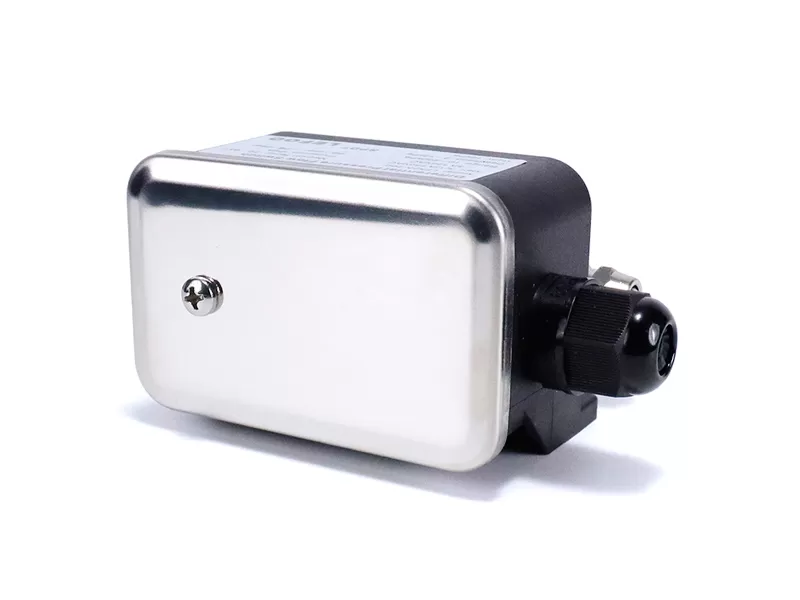
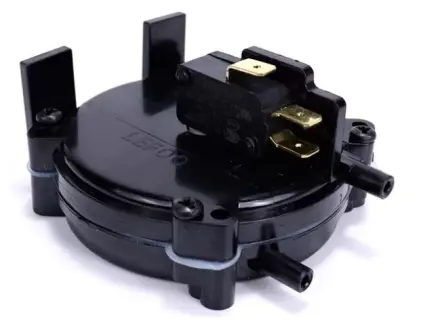
A differential pressure switch for water is particularly useful when the important information is the pressure difference between two points rather than the absolute pressure at one point.
For example, a filter installed in a water circuit creates a pressure drop. As the filter becomes restricted, the difference between the upstream and downstream pressure can increase. A differential pressure switch can respond when the pressure difference reaches a predefined value and send an alarm or control signal.
LEFOO's LF52 and LF52A are designed for this type of application. They can monitor differential pressure across water filters, pumps, heat exchangers, chillers, and coils. The LF52A, for example, supports adjustable differential pressure and can be used as an alternative to certain paddle flow switch applications.
This makes differential pressure monitoring useful for:
Water filtration systems
Chilled-water circuits
Heat exchangers
Pump status monitoring
Cooling systems
Building water systems
The correct selection should consider static pressure, differential pressure range, fluid temperature, connection type, electrical load, and installation space.
A common equipment design question is whether to use a pressure gauge and pressure transmitter together.
In many systems, they serve different purposes.
A pressure gauge gives technicians a direct local indication. It is useful during commissioning, inspection, and maintenance because the operator can see the pressure without accessing the control system.
A pressure transmitter, in contrast, provides a continuous electrical signal to a PLC, controller, BMS, or other automation system. This enables pressure trends, remote monitoring, alarms, and closed-loop control.
Therefore, a practical system may use:
Pressure gauge → local visual inspection
Pressure transmitter → continuous digital monitoring
Pressure switch → independent threshold protection
Using these devices together can provide both operational visibility and protection without forcing one component to perform every function.
A flow switch application should be considered when the primary question is whether fluid is actually moving.
For example, a pump may generate pressure when its outlet is closed, but that does not necessarily prove that adequate circulation exists through a heat exchanger. Flow verification can therefore be an important independent protection layer.
Differential pressure can sometimes be used as an indirect indicator of flow. LEFOO's LF52/LF52A products are designed to detect pressure differences in water circuits and can provide alarm or cut-off signals when the differential reaches a defined point.
For OEMs, the decision between a dedicated flow switch and differential pressure monitoring should depend on:
1. Required accuracy of flow verification.
2. Available installation space.
3. Fluid characteristics.
4. Pressure and temperature conditions.
5. Maintenance requirements.
6. Whether an existing pressure differential can already provide a reliable flow-status signal.
Water purification equipment presents a different control requirement. Here, pressure switches can protect booster pumps and help coordinate operation according to inlet and system pressure.
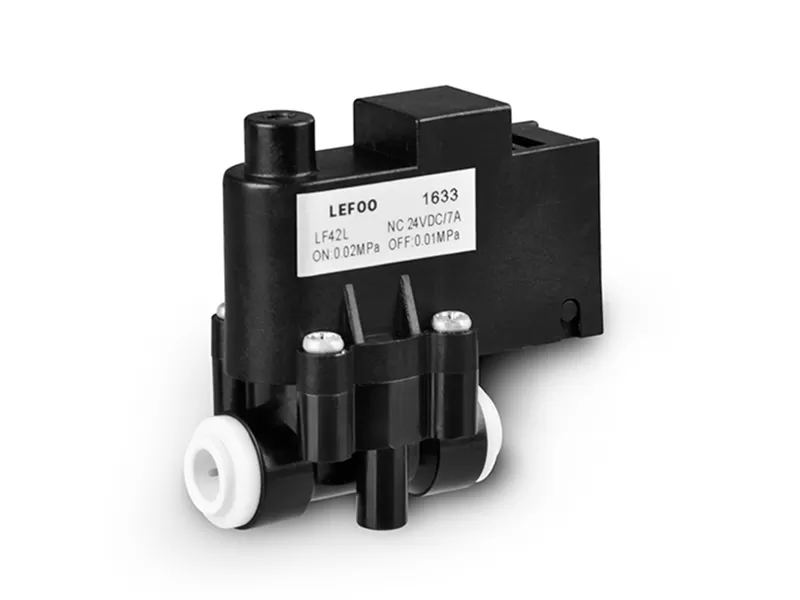
A pressure switch for water purifier can detect low or high pressure and interrupt the pump circuit when a defined condition occurs.
LEFOO's LF08E is specifically designed for water purifier applications. It supports air and water media, a pressure range of 0.05–0.35 MPa, and one- or two-pressure-setting configurations.
LEFOO also offers the LF42 series for water supply pressure protection in RO and water dispenser systems. LF42H provides high-pressure protection, while LF42L provides low-pressure protection to help prevent continued pump operation when inlet water pressure is insufficient.
For these systems, selection should consider pump capacity, membrane requirements, inlet pressure, shut-off pressure, connector configuration, switching cycles, and the characteristics of the treated water.
Heating equipment introduces another type of pressure-control requirement. A furnace does not simply need to know whether pressure is “high” or “low”; it may need to verify that combustion air or exhaust conditions are within the expected range.
An HVAC furnace pressure switch can therefore function as an air-proving or safety interlock component.
LEFOO's LF31 differential furnace pressure switch is designed for HVAC applications where reliable air proving is important. It can sense pressure, vacuum, and differential pressure at low setpoints and is used in gas-fired warm-air furnaces and water heaters.
This type of application demonstrates why the pressure range alone is not enough. Engineers should also evaluate:
Media compatibility
Low-pressure sensitivity
Contact configuration
Electrical load
Operating temperature
Proof and burst pressure
Tubing and mounting arrangement
Required certification
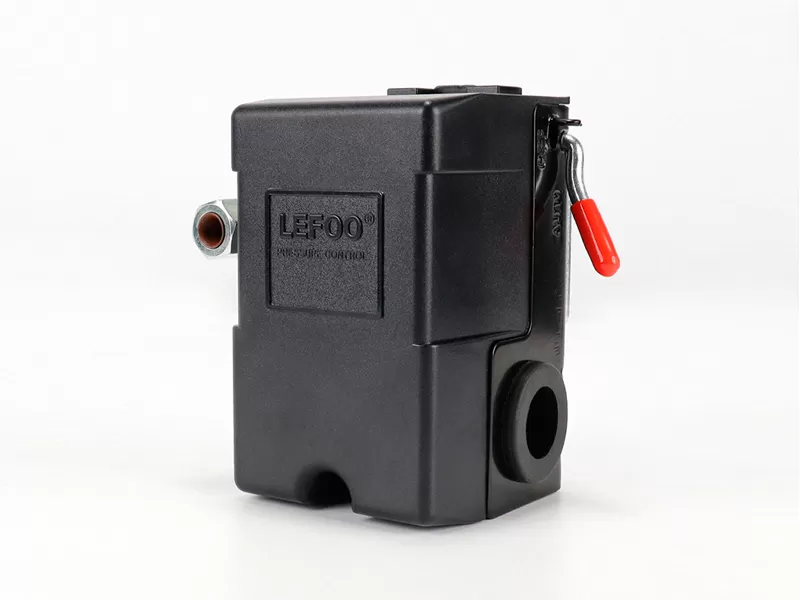
Heating systems can also require a pressure switch steam boiler for pressure-limit control and safety functions.
Steam applications generally impose more demanding temperature and pressure conditions than ordinary water systems. The switch must therefore be selected according to the actual medium, operating pressure, temperature, switching frequency, and safety requirements.
LEFOO's product portfolio includes steam pressure switches such as the LF25, alongside furnace and other pressure-control products.
For OEM equipment, it is important to verify the complete operating envelope rather than selecting a switch based only on nominal boiler pressure.
A useful selection process can be reduced to five steps:
Step 1: Identify the measured condition.
Is the system monitoring pressure, differential pressure, flow, or continuous pressure?
Step 2: Define the medium.
Specify air, water, oil, refrigerant, steam, or another medium.
Step 3: Define operating limits.
Record normal pressure, maximum pressure, temperature, and expected pressure fluctuations.
Step 4: Match the control signal.
Determine whether the system requires a simple microswitch output or an analog signal for PLC/BMS integration.
Step 5: Check mechanical and compliance requirements.
Confirm ports, dimensions, mounting, electrical rating, environmental conditions, and applicable certifications.
This approach helps prevent a common engineering mistake: choosing a component because its pressure range appears correct while overlooking media compatibility, temperature, electrical load, or the actual control objective.
For equipment manufacturers, sourcing pressure switches, differential pressure devices, sensors, and pump-related components from a compatible product portfolio can simplify system development.
LEFOO's range covers mechanical pressure switches, differential pressure switches, pressure sensors, flow-related products, and diaphragm and centrifugal pumps. This allows OEMs to evaluate pressure protection and fluid-handling components within a broader equipment architecture rather than treating each component as an isolated purchase.
The best solution is not necessarily the device with the widest specification. It is the component that matches the measured parameter, medium, operating conditions, control architecture, and application risk.
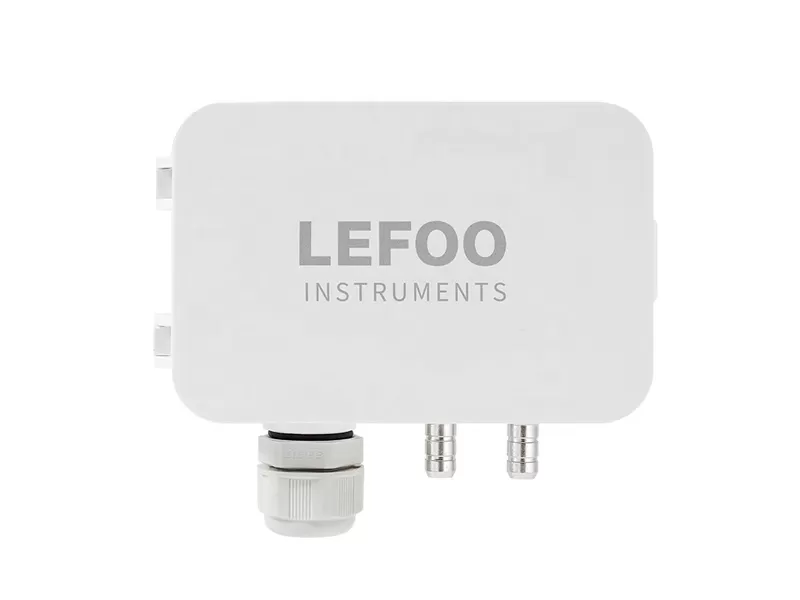
In some applications, differential pressure can be used to indicate flow status, but the two devices are not universally interchangeable. The suitability depends on system design, pressure-flow characteristics, and the required switching point. LEFOO's LF52/LF52A are designed for applications where differential pressure can provide useful flow-related information.
They can complement each other. A gauge provides local visual information, while a transmitter supplies continuous electrical data for monitoring and automation.
Check the pressure range, medium compatibility, switching points, electrical rating, connection, temperature, expected cycle life, installation environment, and application-specific requirements.
It can verify pressure or airflow conditions and provide an electrical interlock when the measured condition reaches a specified setpoint, supporting safe furnace operation.



 Log in
  English
  日本語
日本語  한국어
한국어  français
  Deutsch
  Español
  italiano
  русский
  português
  العربية