
Dampers are mechanical devices used to regulate air volume, pressure, or direction within ducts. In HVAC (Heating, Ventilation, and Air Conditioning) systems, controlling damper opening enables zonal air balancing, maintenance of indoor positive/negative pressure, temperature zone regulation, and control of fresh air to return air ratios. Their control accuracy and response speed directly impact the system's energy consumption levels and indoor air quality.
Modern damper systems typically consist of a damper body, a drive actuator, a position feedback device, and a controller. The actuator receives commands from a Building Automation System (BAS) or an independent controller, driving the damper blades to rotate precisely to a specified angle. An integrated position sensor feeds back the actual opening signal, forming a closed-loop control system. This ensures precision and stability in airflow regulation, meeting the stringent requirements for pressure or airflow in settings such as laboratories, cleanrooms, and hospital operating departments.
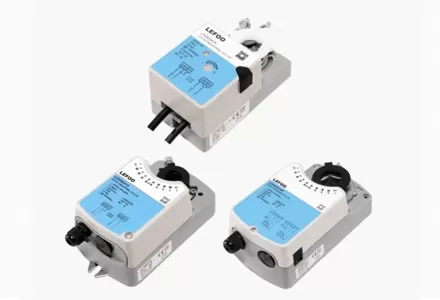
The shut-off sealing performance of a damper is critical, especially in applications like fire dampers, smoke dampers, and system isolation scenarios. By employing high-performance sealing materials (e.g., silicone, EPDM), optimizing the overlap structure between blades and frames, and improving manufacturing precision, the air leakage rate of the damper in the closed position can be effectively minimized. This ensures compliance with fire codes and the effectiveness of system zoning control.
To meet demands for non-standard duct sizes, special shapes (e.g., round, rectangular transitions), high-temperature, high-corrosion, or high-cleanliness environments, we provide customized damper solutions. The design encompasses comprehensive adaptation in material selection (galvanized steel, stainless steel, aluminum alloy), structural form (opposed blade, parallel blade, louver), drive method (electric, pneumatic), and control logic. This ensures reliable integration of the damper within complex systems and the achievement of expected performance.



 Log in
  English
  日本語
日本語  한국어
한국어  français
  Deutsch
  Español
  italiano
  русский
  português
  العربية