
Differential pressure monitoring is widely used in equipment where the relationship between two pressure points provides more useful information than pressure at a single point. HVAC systems, cleanrooms, filtration equipment, furnaces, ventilation units and pneumatic machinery all rely on pressure differences to verify operating conditions.
A differential pressure switch can convert this pressure difference into a simple electrical signal. Depending on the equipment design, it may indicate that a filter needs attention, confirm that airflow has been established, trigger an alarm or enable the next stage of a process.
For equipment manufacturers and system integrators, selecting the appropriate switch requires consideration of the application, pressure range, medium, installation method and switching requirements. LEFOO provides differential pressure switches and related sensing products for HVAC, air handling, industrial automation and other applications.
A conventional pressure switch responds to pressure at one measurement point. A differential pressure switch compares pressure at two points.
This makes it particularly useful when the pressure relationship itself represents the equipment condition.
For example:
A clean filter may have a relatively low pressure difference.
A blocked filter can create a higher pressure difference.
A working fan can create a measurable pressure differential.
A furnace can require a specific pressure condition before operation.
A pneumatic system can use pressure differences to verify a process condition.
This is why terms such as air differential pressure switch are closely associated with air-handling and equipment-monitoring applications.
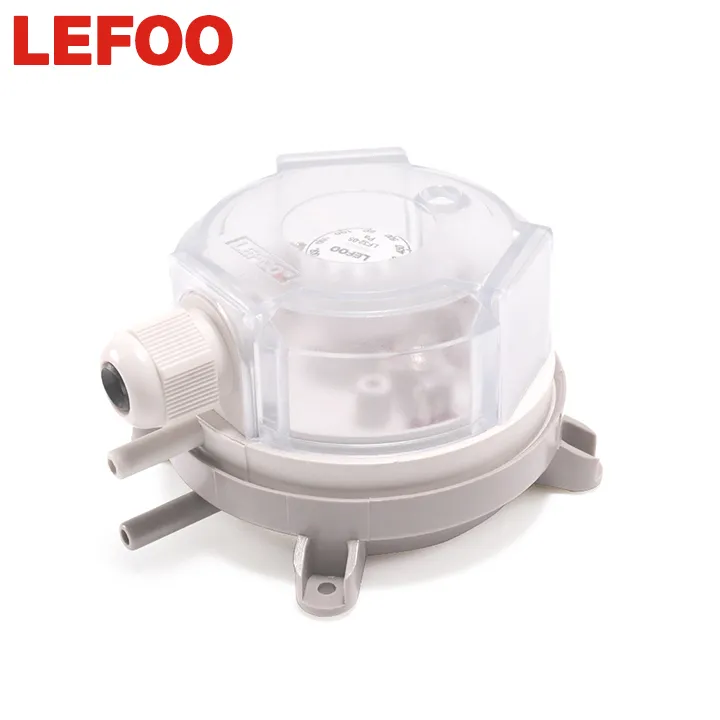
HVAC is one of the most common application areas for differential pressure switching.
Air-handling equipment often contains filters, fans, ducts, dampers and heat-exchange sections. Monitoring pressure at different points can provide useful information about airflow and resistance within the system.
A differential pressure switch can be installed across an air filter. When the filter becomes increasingly contaminated, resistance to airflow increases and the pressure difference rises. Once the pressure reaches a predetermined level, the switch can activate an alarm or maintenance signal.
Other HVAC applications include:
Fan operation monitoring
Airflow proving
Filter blockage detection
Duct pressure monitoring
Ventilation equipment
Air-handling units
Heating and cooling equipment
LEFOO offers differential air pressure switches for HVAC-related applications, including models designed for air pressure monitoring and equipment control.
Cleanroom equipment requires stable airflow and controlled pressure relationships between different zones.
For example, a cleanroom may be maintained at a positive pressure relative to an adjacent area to reduce the possibility of uncontrolled air entering the controlled environment. Differential pressure monitoring can help verify that the required pressure relationship is maintained.
An air differential pressure switch can provide a discrete signal when the pressure difference falls outside a defined operating condition.
This can be useful in:
Pharmaceutical production areas
Medical facilities
Laboratory environments
Semiconductor manufacturing
Food-processing cleanrooms
Controlled production spaces
For applications requiring continuous measurement rather than a simple switching signal, OEMs may combine differential pressure switches with pressure transmitters or digital monitoring systems.
Industrial filtration is another practical application.
A filter gradually accumulates dust, particles or other contaminants during operation. As resistance increases, the pressure difference across the filter can also increase.
A differential pressure switch provides a relatively simple method of detecting this condition.
Instead of estimating filter condition based only on operating hours, equipment designers can use the actual pressure difference as a maintenance indicator.
A typical arrangement is:
Upstream pressure → Filter → Downstream pressure → Differential pressure switch → Control/alarm system
This approach can be applied to:
Dust collection equipment
Air filtration units
Industrial ventilation
Cabinet cooling systems
Exhaust systems
Air purification equipment
For OEMs, the advantage is that the switch can provide a clear maintenance signal without requiring a complex digital sensing system.
Furnaces represent another important application for differential pressure switching.
A furnace may need to verify that a pressure condition exists before allowing a specific operating sequence to continue. The differential pressure between two points can provide an indication of airflow or combustion-related conditions.
A pneumatic differential pressure switch can therefore become part of the equipment's safety or control architecture.
In furnace applications, the pressure connection system is particularly important. Tubing connects the switch to the designated pressure measurement points, so installation must account for tubing routing, temperature, condensation and connection security.
LEFOO's differential pressure product range includes furnace pressure switches designed for HVAC and related air-pressure applications.
The exact switch should always be selected according to the furnace manufacturer's pressure, temperature, medium and safety requirements.
A fan can be running electrically without necessarily producing the expected airflow.
This is where differential pressure monitoring can add another level of equipment verification.
For example, a ventilation system may use pressure connections on either side of a fan or airflow section. When the fan operates correctly, the expected pressure difference should occur. If the fan fails, airflow is restricted or another component becomes abnormal, the pressure condition may change.
A differential pressure switch can then provide a simple fan-status or airflow-proving signal.
This application is relevant to:
Commercial ventilation systems
Industrial exhaust equipment
Air supply units
HVAC fan systems
Laboratory ventilation
Fume extraction equipment
Where more detailed airflow information is required, an air velocity transmitter can complement differential pressure monitoring.
Industrial pneumatic systems can also use differential pressure switching where two pressure points need to be compared.
A pneumatic differential pressure switch may be used for process verification, pressure-loss detection or equipment interlocking, depending on the system architecture.
Potential applications include:
Pneumatic control equipment
Air preparation systems
Industrial automation
Compressed-air equipment
Air filtration
Process machinery
The appropriate pressure range is particularly important because a differential switch designed for low-pressure air monitoring should not automatically be treated as a general-purpose high-pressure pneumatic device.
OEM engineers should also verify the compatibility of the pressure medium, connection type, electrical contacts and environmental conditions.
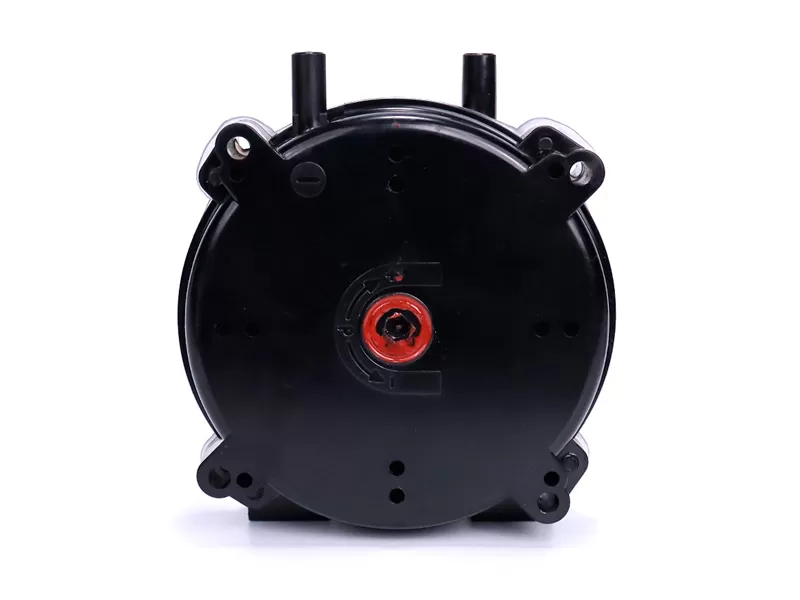
Some equipment operates under negative pressure rather than positive pressure.
An air vacuum switch is designed for applications where the pressure condition moves below atmospheric pressure or where vacuum needs to be detected.
Possible applications include:
Vacuum pumps
Air extraction systems
Suction equipment
Ventilation systems
Industrial material handling
Combustion-air systems
The important consideration is the actual pressure reference. A vacuum application may require a switch specifically designed for negative pressure rather than a conventional positive-pressure switch.
Pressure difference can also be related to flow conditions.
A differential pressure flow switch can be incorporated into systems where a pressure difference across a known restriction or flow element is used to indicate whether fluid or air is moving.
This concept can be applied to:
Pump systems
HVAC water circuits
Airflow systems
Filtration systems
Heat-transfer equipment
Industrial fluid systems
However, pressure difference does not always translate directly into a fixed flow rate. System geometry, fluid properties and the characteristics of the restriction all affect the relationship.
For this reason, OEMs should define whether they need a true flow switch, a differential pressure switch or a continuous flow/pressure sensor.
Modern equipment can use either mechanical or digital approaches depending on the control architecture.
A mechanical differential pressure switch is often appropriate when the requirement is straightforward ON/OFF switching. It can provide a direct signal without requiring complex programming.
A digital differential pressure switch, by contrast, may provide additional configuration, display or communication functions depending on the product architecture.
The choice depends on the equipment's requirements:
Application Requirement | Suitable Approach |
Simple alarm signal | Mechanical differential switch |
Filter maintenance indication | Differential pressure switch |
Basic airflow proving | Differential pressure switch |
Continuous pressure monitoring | Pressure transmitter |
Digital parameter adjustment | Digital differential pressure device |
Advanced data analysis | Sensor/transmitter + controller |
The goal should be to match the sensing technology with the information actually required by the machine.
Before specifying a differential pressure switch, OEM engineers should evaluate several parameters.
Pressure range: Determine the expected differential under normal and abnormal conditions.
Medium: Confirm whether the switch will measure air, combustion products, gas or another medium.
Pressure ports: Verify port type, size and the required tubing arrangement.
Switching characteristics: Define the required setpoint, differential and reset behavior.
Environment: Consider temperature, humidity, vibration, dust and chemical exposure.
Electrical interface: Confirm voltage, current, contact configuration and connector requirements.
Installation position: Ensure that pressure tubing and ports can be installed without creating unwanted restrictions or pressure errors.
These details are particularly important when the component will be incorporated into equipment manufactured repeatedly at OEM scale.
For OEMs, the value of a pressure component extends beyond its basic specification. Product consistency, technical documentation and application knowledge can influence the reliability of the finished equipment.
LEFOO provides pressure switches, differential pressure switches, pressure transmitters, air velocity products and pump solutions across several industrial application areas. Its portfolio allows equipment manufacturers to consider pressure sensing and fluid-handling requirements together rather than treating every component as an isolated purchase.
This approach can be useful when developing HVAC equipment, filtration systems, furnace systems, cleanroom equipment, ventilation products and industrial automation machinery.
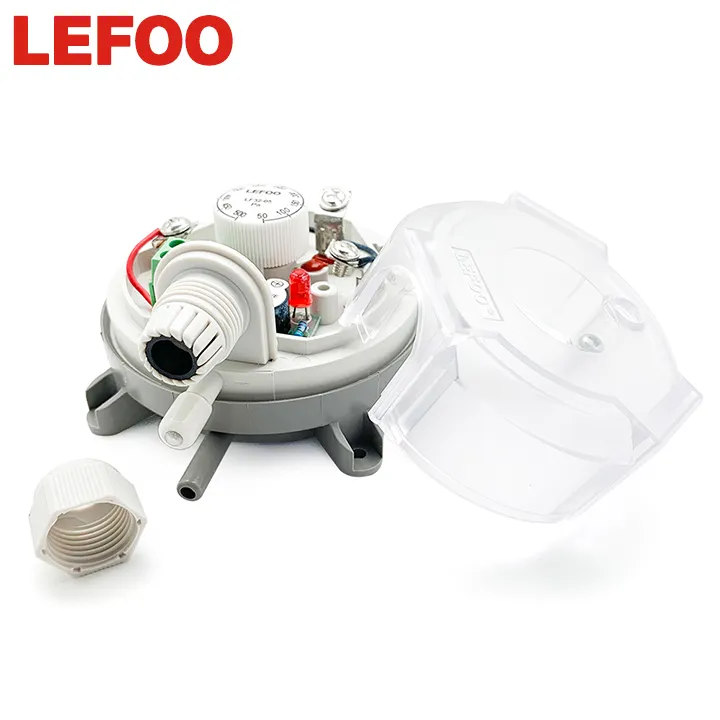
Differential pressure switching is a practical technology because pressure differences often reveal equipment conditions that cannot be identified from a single pressure measurement.
In HVAC systems, it can monitor filters and airflow. In cleanrooms, it can help verify pressure relationships. In furnaces, it can support airflow and operating-condition verification. In ventilation equipment, it can provide fan or airflow proving. In pneumatic and vacuum systems, it can detect specific pressure conditions.
The right choice depends on the application rather than the product name alone. Engineers should evaluate pressure range, medium, connection, switching behavior, environmental conditions and the required level of information.
With its portfolio of differential pressure switches and related sensing technologies, LEFOO can support OEM manufacturers and system designers in developing application-specific air pressure, airflow and equipment-monitoring solutions.
What is an air differential pressure switch used for?
It compares pressure at two points and provides a switching signal when the differential reaches a defined condition. Common applications include HVAC, filter monitoring, ventilation and cleanrooms.
What is a differential pressure switch used for in HVAC?
It can monitor filter resistance, fan operation, airflow conditions and pressure differences within air-handling systems.
What is the difference between an air differential switch and a normal pressure switch?
A differential switch compares two pressure points, while a conventional pressure switch generally responds to pressure at one reference point.
Can a differential pressure switch be used in a furnace?
Yes, suitable differential pressure switches can be incorporated into furnace and HVAC equipment to verify defined airflow or pressure conditions.
When should an OEM choose a digital differential pressure switch?
A digital solution can be considered when the equipment requires additional configuration, display or digital monitoring functions beyond basic mechanical switching.



 Log in
  English
  日本語
日本語  한국어
한국어  français
  Deutsch
  Español
  italiano
  русский
  português
  العربية