
Modern refrigeration and air-conditioning systems are no longer controlled by a single pressure switch. As equipment becomes more compact, efficient, and digitally connected, pressure monitoring needs to perform several functions at the same time: protect compressors, detect abnormal refrigerant conditions, support automatic control, and provide data for system optimization.
This is why manufacturers increasingly combine mechanical pressure switches with pressure transmitters, digital pressure sensors, and other control components.
For refrigeration OEMs, the objective is not simply to measure pressure. It is to build a layered pressure-control architecture in which each device performs a specific function.
LEFOO develops refrigeration pressure switches, pressure transmitters, differential pressure products, and fluid-handling components for HVAC, refrigeration, and related equipment. Its portfolio provides both traditional switching control and electronic pressure measurement options.
A refrigeration system operates within a defined pressure and temperature envelope. If condensing pressure becomes excessive, the compressor and other components can experience additional mechanical and thermal stress. If pressure becomes abnormally low, the system may also experience performance or operational problems.
This makes high pressure control refrigeration an important part of equipment protection.
A pressure switch can provide a relatively simple protective function:
Pressure rises above the setpoint → switch changes state → compressor or control circuit responds.
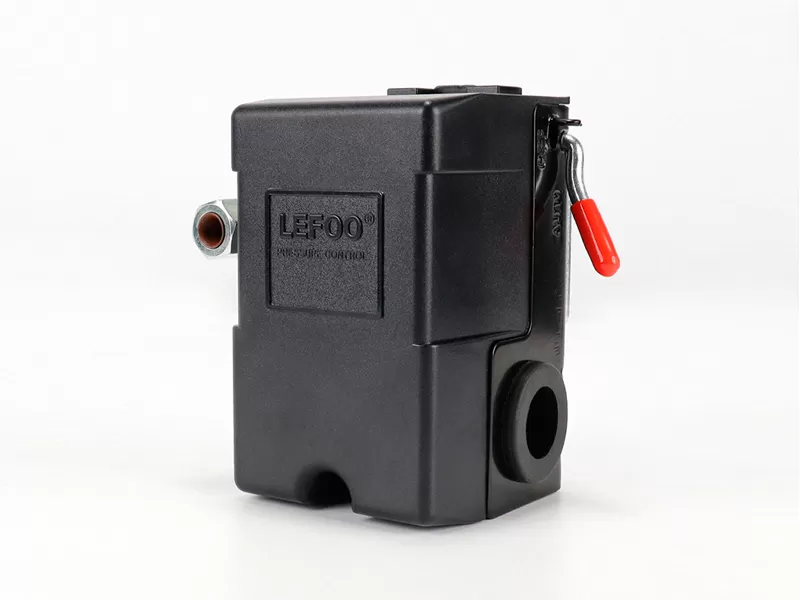
LEFOO's LF55 refrigeration pressure switch is designed for compressor pressure control and protection in refrigeration and HVAC systems. It provides adjustable threshold settings and uses an internal microswitch structure for switching control.
The advantage of this architecture is that the protective function does not necessarily depend on a complex digital controller. A properly selected mechanical pressure switch can provide an independent switching layer.
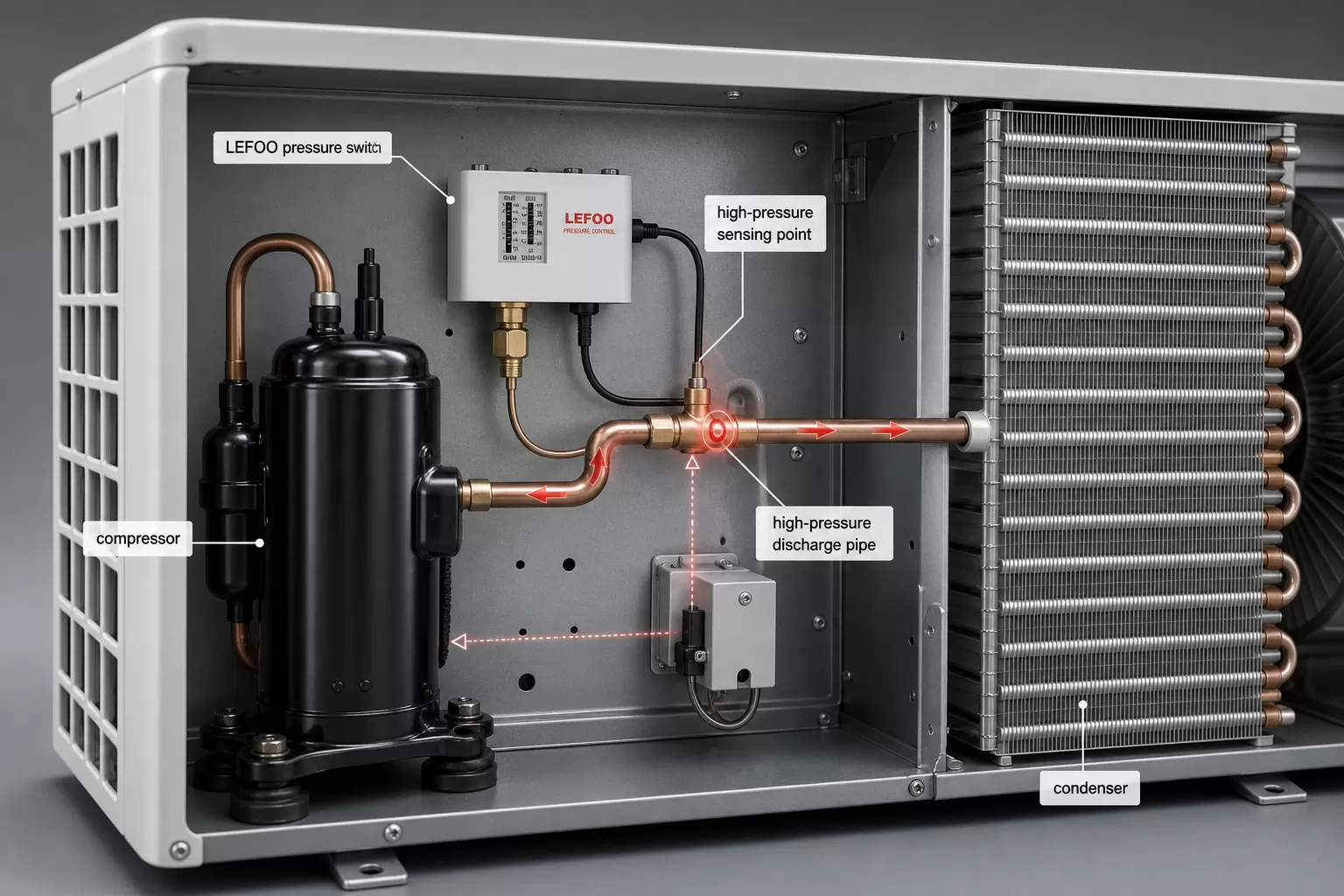
The basic pressure switch function is to change an electrical state when pressure reaches a predetermined value. However, in an engineered refrigeration system, that switching action can perform several jobs.
A pressure switch may be used for:
High-pressure shutdown
Low-pressure protection
Compressor start/stop control
Fan control
Alarm triggering
System interlocking
LEFOO's LF58, for example, is designed to receive pressure signals and actuate. It can be used to control compressor and fan start/stop functions in refrigeration systems, while also supporting pressure protection in applications such as water pumps and boilers.
The important engineering point is that the switch setting should correspond to the actual system operating envelope. A setpoint that is too low may cause nuisance shutdowns, while one that is too high can reduce the protective margin.
One of the most useful design improvements is to combine a pressure transmitter and pressure switch rather than asking one component to perform every task.
The two devices provide different types of information.
Component | Primary role | Signal type | Typical purpose |
Pressure switch | Threshold control | Discrete electrical signal | Protection, shutdown, start/stop |
Pressure transmitter | Continuous measurement | Analog/digital signal | Monitoring, regulation, diagnostics |
Digital pressure sensor | Electronic pressure detection | Digital/analog | Smart equipment and control |
Pressure gauge | Local indication | Visual | Commissioning and maintenance |
A pressure switch can provide a direct protective action, while a transmitter continuously reports system pressure to the controller.
This separation is particularly valuable for OEM equipment. The pressure switch can serve as an independent safety or limit layer, while the transmitter provides the data required for optimization.
A digital pressure sensor can turn pressure information into usable data for an electronic control architecture.
Instead of simply asking whether pressure has exceeded a limit, the controller can monitor pressure trends and respond to changing operating conditions.
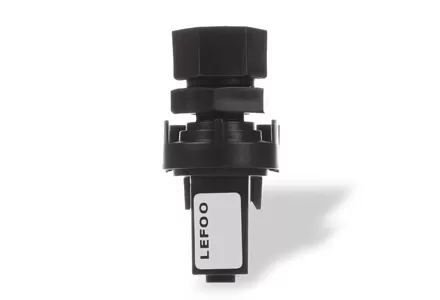
LEFOO's refrigeration pressure transmitter range includes electronic sensing technologies designed for refrigerant pressure measurement. The LFT2060, for example, uses a ceramic capacitor sensing core, provides a 0.5–4.5V proportional output, and is designed for common refrigerants including R22, R32, R134a, R404a, R407C, R410A, and others. It operates across a wide temperature range and provides IP67 enclosure protection.
This type of electronic pressure measurement can support:
Compressor control
Condensing-pressure monitoring
Refrigerant-system diagnostics
Fan-speed control
Electronic alarms
Remote equipment monitoring
The key difference is that pressure becomes a continuous variable within the control system rather than simply an ON/OFF condition.
An air conditioning pressure sensor can provide pressure information to the electronic control system of an HVAC unit.
For example, the controller may use refrigerant pressure information together with temperature and operating status to determine whether compressor or condenser-fan operation should be adjusted.
LEFOO's refrigeration transmitters are designed for air-conditioning, refrigeration, and cooling systems, with models supporting different output and sensing architectures. The LFT2060 uses a proportional voltage output and is designed for refrigerant pressure measurement.
This approach creates an important shift:
Traditional control: Pressure exceeds limit → protection activates.
Smart control: Pressure is continuously measured → controller analyzes the condition → equipment output is adjusted → protection remains available as an independent layer.
The second architecture provides more information for system optimization.
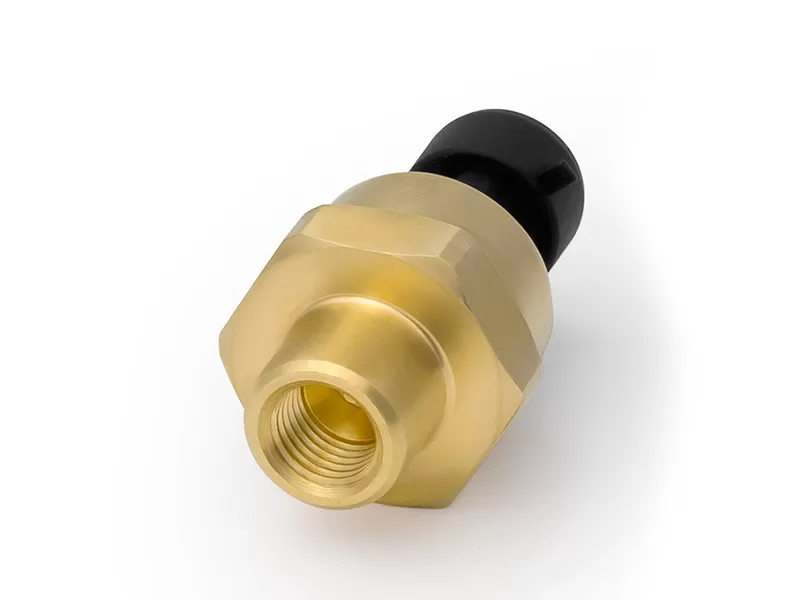
A diaphragm pressure sensor is another sensing architecture used where pressure needs to be converted into an electrical signal.
The sensing diaphragm responds to pressure changes, while the associated sensing element and electronics convert the mechanical change into an electrical output.
For OEMs, the important considerations are not simply the sensor principle. The complete assembly should be evaluated according to:
Pressure range
Overload capability
Media compatibility
Temperature range
Accuracy
Output signal
Electrical interface
Protection rating
Mechanical connection
These parameters determine whether a sensor is suitable for refrigeration, HVAC, water, pneumatic, or industrial equipment.
The compressor is one of the most important components in a refrigeration system, so pressure monitoring often needs to distinguish between different operating conditions.
A high-pressure switch can protect against excessive discharge-side pressure. A low-pressure control can monitor suction-side conditions. An electronic pressure transmitter can provide continuous data for the controller.
This creates a layered architecture:
High-pressure switch → independent protection
Low-pressure switch → operating/protection control
Pressure transmitter → continuous measurement
Controller → system optimization
Such an architecture can provide both immediate protection and long-term diagnostic information.
Pressure control is not limited to refrigeration. Heating equipment also requires reliable pressure sensing.
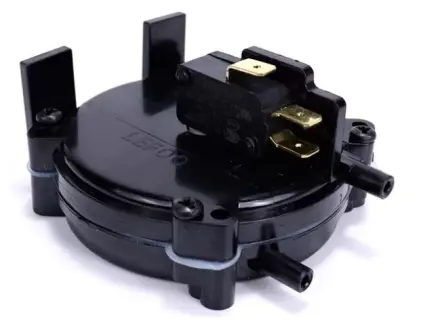
In furnace applications, the pressure switch tubing furnace arrangement connects the sensing point to the pressure switch so that the switch can detect pressure or differential pressure conditions.
The tubing must be correctly routed and matched to the application because restrictions, leaks, condensation, or incorrect connections can affect the pressure signal.
LEFOO's LF31 differential furnace pressure switch is designed for low-pressure air-proving applications in HVAC equipment, including gas-fired warm-air furnaces and water heaters. Its design supports pressure, vacuum, and differential-pressure sensing.
This illustrates an important principle: the pressure switch itself is only one part of the measurement chain. The sensing connection, mounting position, operating medium, and setpoint all affect the reliability of the final control function.
Pressure sensing and pumping can also be integrated in low-voltage fluid systems.
A 24V DC booster pump is useful when equipment requires compact water-pressure boosting and must operate from a low-voltage electrical architecture. LEFOO's LFP series includes 24V DC diaphragm booster pumps with different flow and pressure configurations. For example, the LFP100 series includes 24V DC models with working pressures around 0.5 MPa and different flow capacities depending on configuration.
In an integrated system, a pressure sensor can monitor the water circuit while the pump responds to demand.
This architecture is relevant to:
RO systems
Water purification equipment
Compact cooling equipment
Mobile fluid systems
OEM appliances
Low-voltage water circulation systems
The pump provides the physical fluid movement, while the sensor provides the information required for control.
The development of pressure-control technology is not about replacing every mechanical switch with a digital sensor. Instead, the most reliable architecture often combines different technologies.
A practical OEM system may use:
Mechanical pressure switch → independent safety
Digital pressure sensor → continuous measurement
Pressure transmitter → controller/BMS communication
Pump or compressor → physical system response
Software/controller → optimization and diagnostics
LEFOO's product range covers these different layers, allowing equipment manufacturers to select mechanical and electronic pressure-control components according to application requirements.
The result is a more structured control system: pressure is measured continuously where necessary, critical limits can be protected independently, and equipment can respond to actual operating conditions.
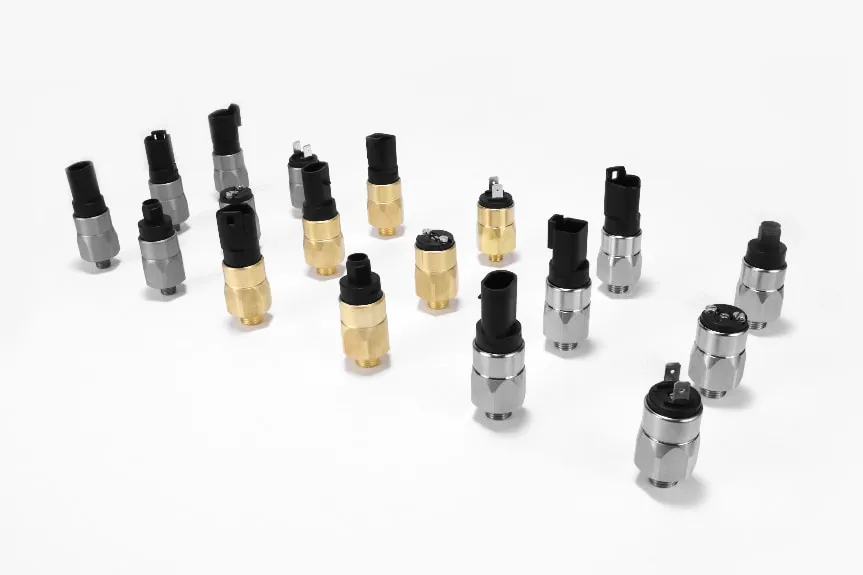
For a new refrigeration or HVAC design, engineers should answer five questions before selecting a pressure-control component:
1. Is the requirement protection or continuous measurement?
2. What refrigerant or medium will contact the sensor?
3. What pressure and temperature range must be covered?
4. Does the controller require a switch, analog, or digital signal?
5. Is an independent safety layer required?
For simple limit protection, a mechanical pressure switch may be sufficient. For electronic regulation and diagnostics, a pressure transmitter or digital pressure sensor may be more appropriate. For critical equipment, combining both can provide a stronger control architecture.
For refrigeration and HVAC manufacturers, pressure control is increasingly becoming part of the overall equipment architecture rather than an isolated component.
LEFOO combines refrigeration pressure switches, electronic pressure transmitters, differential pressure products, and DC booster pumps within a broader pressure-control and fluid-handling portfolio. Its refrigeration products cover compressor control, high- and low-pressure protection, and electronic refrigerant measurement.
The most effective design therefore does not simply ask, “Which pressure switch should we use?”
A better question is:
Which combination of sensing, switching, pumping, and control technologies provides the required safety, efficiency, monitoring, and integration for the complete system?
That system-level approach is where modern pressure-control technology delivers its greatest value.



 Log in
  English
  日本語
日本語  한국어
한국어  français
  Deutsch
  Español
  italiano
  русский
  português
  العربية