
For OEM equipment manufacturers, selecting individual components is only part of the engineering challenge. A pressure switch may protect a compressor, while a pressure transmitter provides continuous measurement and an air velocity transmitter supplies airflow data. A booster pump may maintain water pressure, while a differential pressure device monitors filters or ducts.
The real challenge is making these components work together within one machine architecture.
This is where an integrated component strategy can reduce engineering complexity. Instead of sourcing every sensing and fluid-handling component independently, OEMs can work with a supplier that understands pressure control, measurement, airflow monitoring and pumping as connected functions.
LEFOO provides pressure switches, pressure transmitters, differential pressure products, air velocity transmitters and booster pumps that can be considered as part of a broader OEM equipment design.
A modern machine often requires three different levels of pressure and airflow control:
Protection: switching the system when a pressure limit is reached.
Measurement: continuously monitoring pressure or differential pressure.
Control: sending measurement signals to a controller, PLC or building management system.
These functions should not automatically be handled by the same device.
For example, a mechanical pressure switch can provide a direct electrical switching function for protection or interlocking, while a pressure transmitter can continuously convert pressure into an analog signal for monitoring and control.
This distinction becomes important when an OEM is designing equipment for repeat production. The component must not only work technically; it must also integrate into the machine's electrical architecture, enclosure, mounting system, software and production process.
Understanding the difference between pressure switch and pressure transmitter helps engineers assign the right component to the right task.
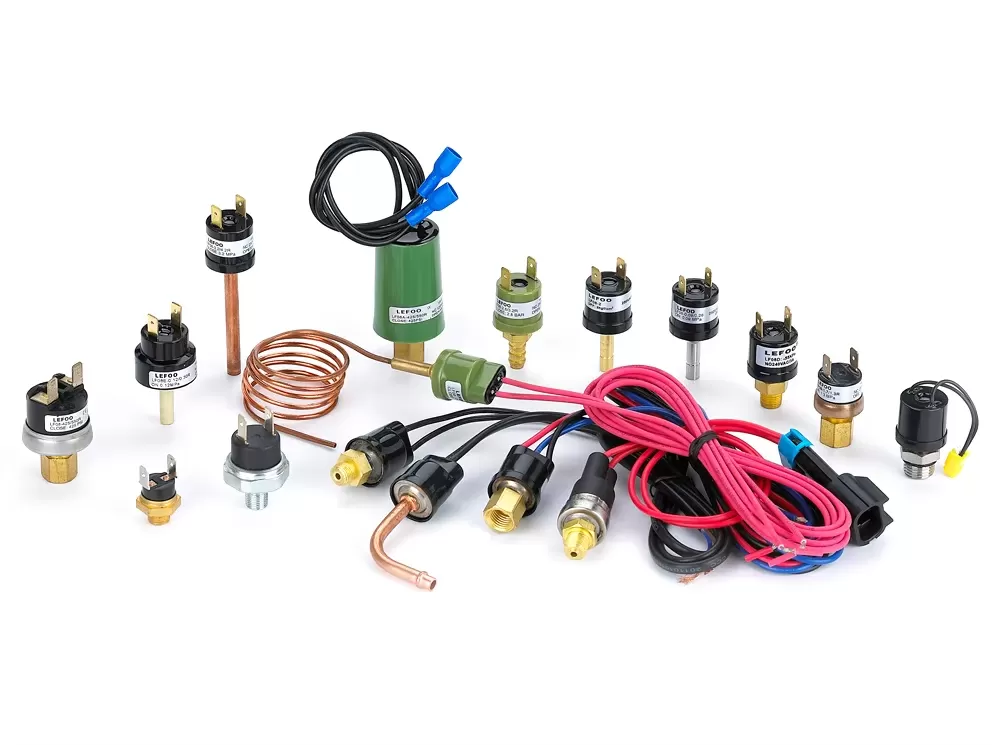
A pressure switch generally provides a switching action at a defined pressure point. It is suitable when the equipment needs a simple ON/OFF response, such as stopping a compressor or triggering a protection circuit.
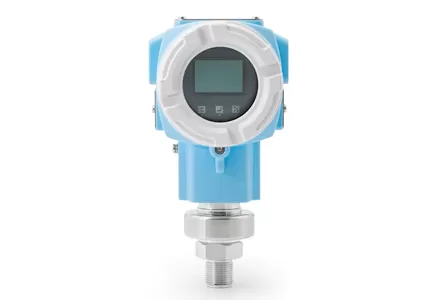
A pressure transmitter continuously measures pressure and provides an output signal, such as 4–20 mA or 0–10 V, for a controller or monitoring system.
Therefore, the question is not simply whether to choose a pressure switch and pressure transmitter. An OEM may need both.
OEM Requirement | More Suitable Component |
Simple pressure-based ON/OFF control | Pressure switch |
High/low pressure protection | Pressure switch |
Continuous pressure monitoring | Pressure transmitter |
PLC or BMS input | Pressure transmitter |
Trend monitoring and diagnostics | Pressure transmitter |
Safety interlock | Pressure switch |
Closed-loop pressure control | Pressure transmitter |
LEFOO's general industry pressure transmitter range includes models with standard analog outputs such as 4–20 mA and 0–10 V, while its pressure switch portfolio covers mechanical switching applications.
An HVAC OEM may need to monitor several variables within the same air-handling system.
A DP switch in HVAC equipment can be used for switching based on pressure differences, while a differential pressure transmitter can provide continuous measurement for more advanced control strategies.
For example, an air-handling unit may use differential pressure measurement to determine filter loading or support fan-speed control. An independent pressure switch can provide a straightforward protection or alarm function.
LEFOO's HVAC product portfolio includes the LF32 HVAC differential air pressure switch, together with multiple HVAC differential pressure transmitter models such as the LFM11, LFM108, LFM52 and LFM73.
This creates an opportunity for OEMs to design different equipment versions around a compatible component family rather than redesigning the entire sensing architecture for each model.
Pressure alone does not always tell an OEM how air is moving through a machine.
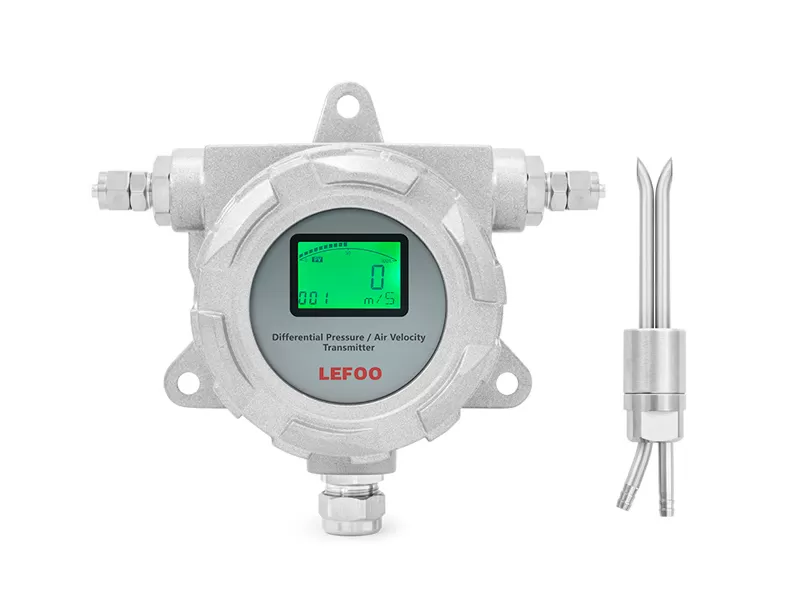
An air velocity transmitter can provide direct airflow-related measurement for applications such as air handling units, fume hoods, industrial drying equipment and ventilation systems.
For example, an OEM air-handling system could combine:
1. Differential pressure sensing for filter or duct monitoring.
2. Air velocity measurement for airflow verification.
3. A pressure switch for a defined protection or alarm condition.
4. A controller to process the measurement signals.
LEFOO's LFS series includes air speed and air velocity transmitters, including versions designed for low air speed and specialized environments. The company also positions these products for OEM integration in air handlers and fume hoods.
This type of architecture is particularly useful when the OEM wants the final equipment to provide measurable operating data rather than relying only on mechanical switching.
Furnaces and combustion-related equipment often require pressure monitoring because airflow and pressure conditions can influence safe operation.
A furnace differential pressure switch is designed to respond to the pressure difference between two points. It can be incorporated into equipment where the control system needs to verify a pressure condition before allowing another operation to proceed.
LEFOO lists the LF31 Differential Furnace Pressure Switch as part of its differential pressure product family.
For OEM designers, the important consideration is not simply the switch's nominal range. The pressure reference points, switching characteristics, environmental temperature, electrical load and installation method should all be evaluated against the finished equipment.
In compressor equipment, a pressure switch and pressure transmitter can perform complementary functions.
An air compressor pressure switch how it works question can be answered simply: the switch responds when system pressure reaches its configured switching point and changes the electrical state of its contacts.
A transmitter works differently. Instead of simply changing contact status, it continuously communicates pressure information to the machine controller.
An OEM compressor package might therefore use a pressure switch for independent pressure protection while using a transmitter for digital monitoring, remote diagnostics or variable-speed control.
LEFOO's portfolio includes dedicated air compressor pressure switches such as the LF08D as well as general industrial pressure transmitters, giving OEMs options for both discrete and continuous pressure functions.
Air and pressure control are only part of many OEM systems. Water treatment, dispensing, humidification and other fluid-handling equipment may also require a compact pumping solution.
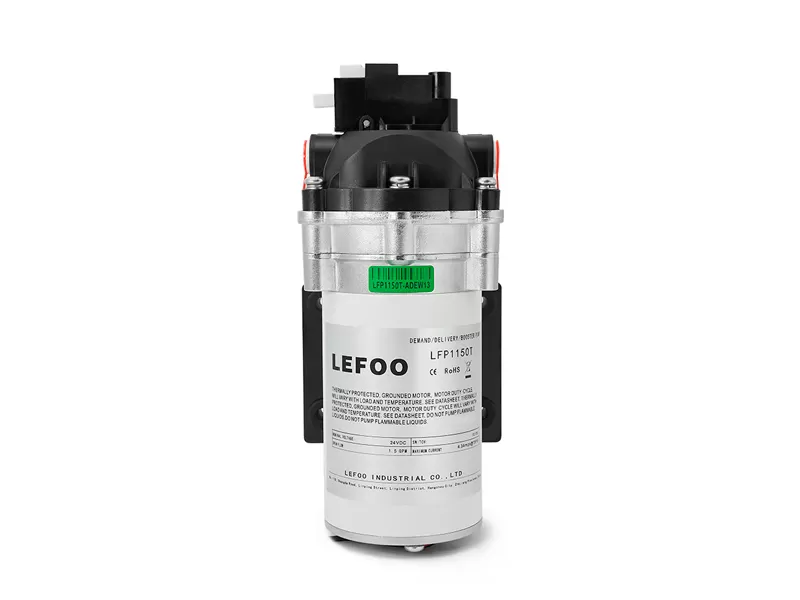
A 24v booster pump can be integrated where a DC power architecture is preferred and additional water pressure is required.
LEFOO's documentation lists 24V booster pump configurations alongside its broader diaphragm booster pump portfolio. This allows OEM engineers to consider pumping, pressure switching and sensing components within the same supplier ecosystem.
For equipment manufacturers, this can simplify qualification, purchasing and spare-parts management when multiple components originate from a coordinated product portfolio.
Rather than beginning with a product model, OEM engineers should create a component specification based on the complete machine.
Key parameters include:
Mechanical: mounting dimensions, thread type, port configuration and available installation space.
Pressure: operating range, maximum pressure, differential range and pressure media.
Electrical: voltage, current, switching capacity, analog output and connector type.
Environmental: temperature, humidity, vibration, dust and chemical exposure.
Control: ON/OFF switching, analog measurement, alarm output or closed-loop control.
Production: assembly method, repeatability, documentation, testing and expected annual volume.
LEFOO provides product specifications, manuals and downloadable technical documentation across its pressure switches, transmitters, air velocity transmitters and pump categories, supporting OEM engineering and integration work.
For OEMs, supplier consolidation should not mean compromising technical fit. The objective is to create a more manageable component ecosystem.
A supplier capable of supporting pressure switching, pressure measurement, airflow sensing and fluid handling can help an equipment manufacturer standardize interfaces and simplify sourcing.
LEFOO has organized its portfolio across mechanical pressure switches, industrial sensors, actuators, diaphragm booster pumps, peristaltic pumps and brushless DC centrifugal pumps. Its product structure therefore extends beyond a single pressure-control component.
For new equipment development, this broader portfolio can support a progression from individual component selection toward a complete sensing, control and fluid-handling architecture.
The best OEM component strategy is not necessarily to find one universal sensor or switch. It is to assign each component a clear function within the equipment.
A pressure switch can provide discrete protection. A pressure transmitter can supply continuous measurement. A differential pressure switch can monitor a critical pressure relationship. An air velocity transmitter can add direct airflow information, while a 24V booster pump can provide the required fluid pressure.
By treating these products as parts of one system architecture, OEMs can improve design consistency, simplify procurement and create equipment that is easier to monitor and maintain.
For manufacturers developing HVAC equipment, compressors, air-handling systems, water-treatment equipment or other industrial machines, LEFOO offers a broader component portfolio that can support the transition from individual parts to integrated pressure, sensing and fluid-handling solutions.
What is the difference between a pressure switch and a pressure transmitter?
A pressure switch normally provides a discrete switching action at a defined pressure, while a pressure transmitter continuously measures pressure and provides an output signal for monitoring or control.
Can an OEM use both a pressure switch and a pressure transmitter?
Yes. They can perform different functions in the same machine, such as independent protection through a switch and continuous measurement through a transmitter.
What is a dp switch in HVAC equipment?
A differential pressure switch monitors the pressure difference between two points and can provide a switching signal when the differential reaches a defined condition.
When should an OEM use an air velocity transmitter?
It is useful when the equipment requires direct airflow or air-speed measurement, including air handlers, ventilation equipment, fume hoods and industrial drying systems.
Does LEFOO provide components for OEM integration?
Yes. LEFOO offers pressure switches, pressure transmitters, HVAC differential pressure products, air velocity transmitters and booster pumps, with technical documentation and OEM-oriented product solutions.



 Log in
  English
  日本語
日本語  한국어
한국어  français
  Deutsch
  Español
  italiano
  русский
  português
  العربية