
Energy consumption, water loss, and equipment safety are closely connected in modern fluid and HVAC systems. A pump that runs longer than necessary consumes additional electricity. Excessive pressure can accelerate leakage and component wear. Insufficient airflow or abnormal steam pressure can create operational and safety risks.
For this reason, modern equipment increasingly combines pressure switches, differential pressure sensors, pressure transmitters, flow controls, and intelligent pumps to make fluid systems more efficient and responsive.
The goal is not simply to measure pressure. It is to detect operating conditions, make the right control decision, and prevent unnecessary energy or water consumption.
LEFOO develops pressure control, sensing, and fluid-handling products that can be integrated into water treatment, HVAC, refrigeration, heating, and industrial equipment. Its portfolio includes mechanical pressure switches, differential pressure switches, transmitters, flow switches, and pumps.
One of the simplest ways to reduce energy use is to avoid unnecessary pump or compressor operation.
A pressure switch can automatically start or stop equipment when pressure reaches defined limits. For example, in a water pumping system, the controller can stop the pump after the required pressure is reached instead of allowing the motor to operate continuously.
LEFOO's pressure switch applications include water pumps, compressors, HVAC equipment, and other systems where automatic pressure-based control is required. The company's application information specifically identifies automatic pump control as a way to maintain stable water pressure while avoiding unnecessary continuous operation.
This creates a simple control sequence:
Pressure drops → pump starts → pressure recovers → pump stops
Instead of operating continuously, the pump responds to actual system demand.
For OEM equipment, this approach can reduce electrical consumption while also decreasing motor operating hours and mechanical wear.
In HVAC systems, energy efficiency depends heavily on maintaining the right airflow and pressure conditions.
A conventional system may continue operating at a fixed output even when filters become restricted or airflow requirements change. Differential pressure monitoring provides another layer of information.
An HVAC differential pressure switch can detect pressure differences across filters, ducts, coils, or other components. A differential pressure transmitter can provide continuous data to a building management system or controller.
LEFOO's LFM73 differential pressure transmitter, for example, uses a MEMS pressure sensor and supports applications including energy management systems, HVAC, VAV, fan control, and boiler-related pressure monitoring.
This allows the system to move from simple threshold protection toward data-based control.
For example:
Low differential pressure → normal airflow
Increasing differential pressure → filter or airflow resistance increasing
Abnormal differential pressure → maintenance or control action required
Instead of replacing filters or operating fans according to a fixed schedule, system operators can make decisions based on actual conditions.
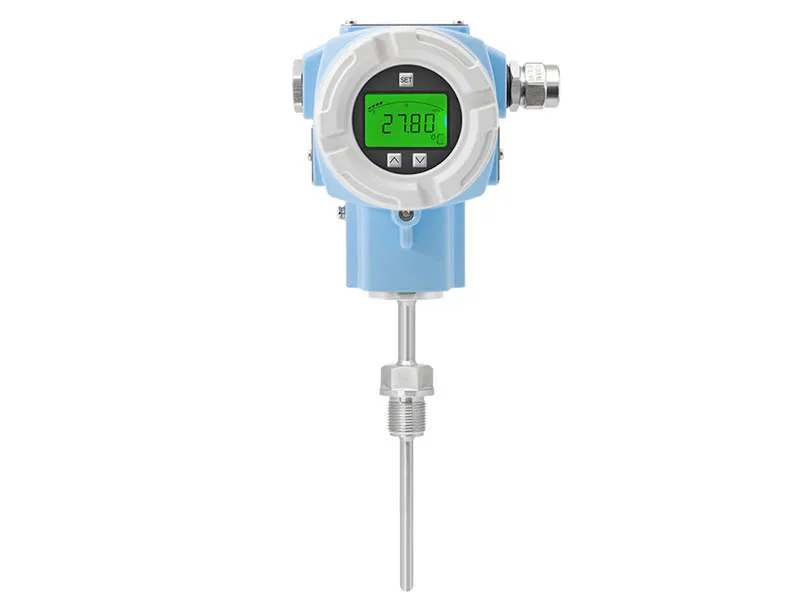
A pressure switch generally provides a discrete switching action. A pressure transmitter provides continuous measurement.
This difference is important for energy management.
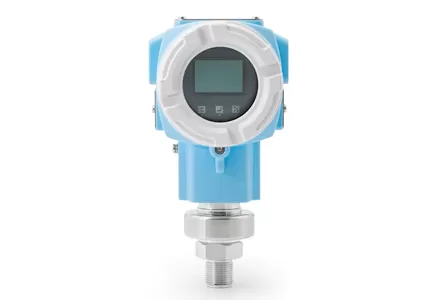
A pressure gauge and pressure transmitter may both indicate pressure, but they serve different control purposes. A gauge provides local visual information, while a transmitter can send a continuous electrical signal to a PLC, BMS, or other controller.
LEFOO differential pressure transmitters can provide outputs such as 4–20 mA, 0–5/10 VDC, or RS485 depending on the model. These signals allow pressure information to become part of an automated control system.
With continuous measurement, the system can adjust:
Fan speed
Pump operation
Valve position
Alarm thresholds
Airflow
Water pressure
This is particularly useful when equipment operates under variable loads.
Energy efficiency is only one part of fluid-system optimization. Water conservation also depends on avoiding over-pumping, leakage, and unstable system operation.
A pressure switch can prevent a pump from operating outside its intended pressure range. A differential pressure switch can identify abnormal pressure conditions across filters, pumps, and heat exchangers.
LEFOO's LF52A adjustable water differential pressure switch is designed to detect differential pressure across water filters, pumps, heat exchangers, chillers, and coils. It can output an alarm or cut-off signal when the differential pressure reaches the defined setting.
This type of monitoring can help protect water systems in two ways.
First, it can identify abnormal resistance or blockage before the system becomes severely inefficient. Second, it can prevent equipment from continuing to operate under unsuitable conditions.
In water treatment and circulation systems, maintaining the correct pressure and flow can therefore support both water efficiency and equipment reliability.
Water purification equipment provides a compact example of how pressure control contributes to both resource efficiency and safety.
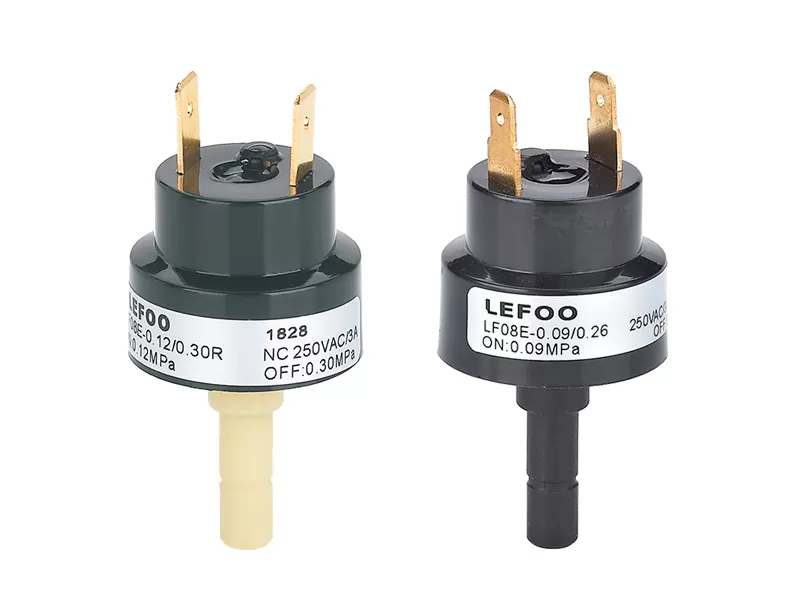
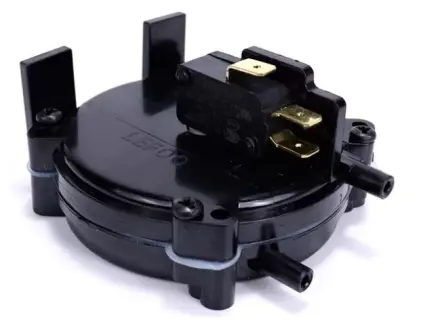
A pressure switch for water purifier can detect whether pressure conditions are within the required operating range and control the associated pump or protection circuit.
LEFOO's LF08E is specifically designed for water purifier applications. It supports air and water media, a 0.05–0.35 MPa pressure range, and one- or two-pressure-setting configurations.
The purpose is not simply to maintain pressure. Correct pressure control can help protect pumps and membranes while preventing unnecessary operation.
In an RO system, for example, pressure-related control can be combined with a booster pump, membrane, valves, and sensors to create a coordinated water-treatment system.
Energy saving should never compromise equipment safety.
Pressure control components also act as protective devices. When pressure exceeds a predefined limit, a switch can interrupt an electrical circuit, trigger an alarm, or initiate another protective action.
This is especially important for steam and high-temperature systems.
A steam pressure switch can provide pressure-limit control in boilers and steam systems. LEFOO's LF56 boiler steam pressure controller is designed for pressure control, limit, and alarm functions for non-hazardous liquid, gas, and steam. Depending on the model, it supports different operating pressure ranges and media temperatures up to 180°C.
The broader LEFOO steam and boiler pressure-switch range is positioned for boiler safety, burner control, refrigeration pressure protection, and high-temperature applications.
In these applications, the pressure switch becomes part of the equipment's safety architecture rather than simply a measurement component.
Compressed-air systems can consume substantial energy, especially when pressure is maintained unnecessarily high or when equipment operates under abnormal conditions.
A compressor differential pressure monitoring strategy can help identify pressure changes associated with filters, oil systems, or other components, depending on the equipment architecture.
Similarly, an air DP switch can provide threshold-based monitoring of pressure differences in air-handling and ventilation systems.
The advantage of differential measurement is that it focuses on the change between two points rather than only measuring absolute pressure. This can make it useful for detecting resistance, blockage, or airflow conditions.
For OEMs, selecting the appropriate pressure range and switching point is essential because excessive sensitivity can generate nuisance alarms, while an excessively wide range may delay the required response.
The next generation of fluid-control systems increasingly combines mechanical protection with electronic sensing.
A practical architecture can include:
Pressure switch → independent safety or limit control
Differential pressure transmitter → continuous system monitoring
Flow switch → flow/no-flow verification
Pump → controlled fluid delivery
PLC/BMS → system-level optimization
LEFOO's portfolio spans these different technologies, including mechanical pressure switches, differential pressure products, flow switches, transmitters, and multiple pump categories.
This combination allows OEMs to choose the appropriate technology for each control layer rather than relying on a single component.
There is no single technology that automatically makes a system energy-efficient or water-saving. The result depends on how sensing and control components are integrated.
The most useful technologies include:
Technology | Main contribution |
Pressure switch | Automatic start/stop and limit protection |
Differential pressure switch | Threshold-based pressure difference monitoring |
Pressure transmitter | Continuous measurement and optimization |
Flow switch | Flow-status verification |
MEMS pressure sensor | Compact and precise digital sensing |
Variable-speed pump/control | Output adjustment according to demand |
Digital communication | Integration with PLC/BMS and energy-management systems |
The key principle is simple: measure actual conditions, control only when necessary, and protect the system when abnormal conditions occur.
For equipment manufacturers, energy saving, water conservation, and safety increasingly need to be designed together.
LEFOO's product portfolio combines pressure switches, differential pressure products, transmitters, flow controls, and pumps, allowing OEMs to build different levels of monitoring and control into their equipment. Its HVAC solutions also identify differential pressure transmitters, pressure switches, and pumps as components for energy-efficient hydronic and air-management systems.
The most effective solution is therefore not simply a more advanced sensor. It is a coordinated system in which pressure, differential pressure, flow, and pump operation work together.
When correctly engineered, these technologies can help equipment consume less energy, use water more efficiently, respond faster to abnormal conditions, and provide better visibility for maintenance and system optimization.



 Log in
  English
  日本語
日本語  한국어
한국어  français
  Deutsch
  Español
  italiano
  русский
  português
  العربية