
Pressure control is essential in air compressors, HVAC equipment, refrigeration systems, water treatment equipment and other industrial machines. A suitable pressure switch can monitor system pressure, start or stop equipment, provide protection against abnormal conditions, and support stable operation.
However, pressure switches are not interchangeable. The required pressure range, differential, medium, electrical rating, installation environment and control function all affect the correct choice. LEFOO, a manufacturer of pressure control, sensing and fluid-handling products, provides pressure switches and related solutions for applications ranging from air compressors and HVAC systems to refrigeration and water treatment.
This guide explains the key differences between pressure switch types and how to select the right solution.
A pressure switch is an electromechanical or electronic device that changes an electrical circuit when pressure reaches a predetermined value. Depending on the design, it may switch equipment on or off at a set pressure or provide a safety signal to a control system.
For example, an air compressor pressure switch can detect when tank pressure reaches the upper setpoint and stop the compressor. When pressure falls to the lower setpoint, the switch can signal the compressor to restart.
The difference between these two pressure points is commonly called the differential or pressure differential. This is why users searching for switch diff are often looking for information about how the cut-in and cut-out points relate to each other.
LEFOO offers several pressure switch categories, including air compressor and water pump pressure switches, differential pressure switches, refrigeration pressure switches and digital pressure switches.
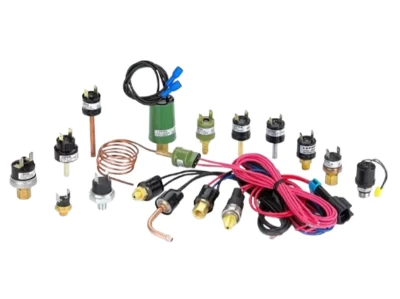
Pressure differential is one of the most important parameters when selecting a mechanical pressure switch.
Consider a compressor configured to start at 6 bar and stop at 8 bar:
Cut-in pressure: 6 bar
Cut-out pressure: 8 bar
Differential: 2 bar
A suitable differential prevents the compressor from cycling too frequently. If the difference is too small, the compressor may start and stop repeatedly, increasing mechanical and electrical stress.
The correct differential depends on the equipment design and operating requirements. It should therefore be selected according to the manufacturer's recommended operating range rather than adjusted arbitrarily.
For example, LEFOO's LF19 air compressor and water pump pressure switch provides different factory setting options and differential ranges, with electrical ratings up to 250 VAC and 16A/25A depending on configuration.
When adjusting the pressure switch on a air compressor, safety and equipment specifications should come first. The exact adjustment procedure varies according to the pressure switch design.
A typical adjustment process includes:
1. Disconnect power and release pressure where required before opening or servicing the control.
2. Identify the cut-in and cut-out pressure requirements specified for the compressor.
3. Determine whether the switch provides separate adjustment of operating pressure and differential.
4. Make small adjustments rather than changing the setting significantly in one step.
5. Restore the system and observe the actual cut-in and cut-out pressures.
6. Confirm that the compressor cycles within the manufacturer's recommended operating range.
Do not use adjustment alone to compensate for an incorrectly sized switch. If the pressure range, electrical rating or connection type does not match the compressor, replacing the switch with a suitable model may be the better solution.
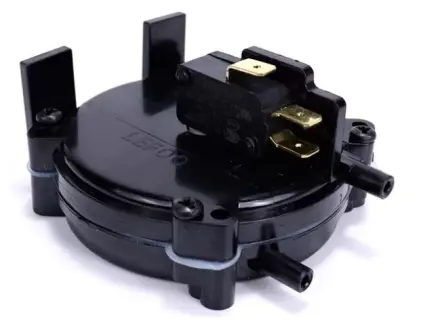
An air differential pressure switch monitors the pressure difference between two points rather than measuring pressure at only one point.
For example, an air handling unit may have one pressure connection upstream of a filter and another downstream. As the filter becomes blocked, the pressure difference can increase. A differential pressure switch can detect this change and provide a switching signal.
An air differential pressure switch can therefore be useful for:
Air filter monitoring
Ventilation systems
Fan status monitoring
Cleanroom equipment
Air handling units
Duct pressure monitoring
Furnace and combustion applications
LEFOO's product range includes dedicated differential air pressure switches such as the LF30, LF31, LF32 and LF35, covering different application requirements.
A differential pressure switch HVAC solution is commonly used where airflow or pressure conditions need to be monitored.
In an HVAC system, the switch can detect whether a fan is operating correctly, whether a filter is becoming restricted, or whether a required pressure difference has been reached. This makes differential pressure monitoring useful for air handling units, ventilation systems and cleanroom applications.
The selection process should consider:
Selection Factor | What to Check |
Pressure range | Normal and maximum differential pressure |
Medium | Air, water, refrigerant or other compatible medium |
Switching accuracy | Required operating tolerance |
Electrical rating | Voltage, current and contact configuration |
Environment | Temperature, humidity, dust and vibration |
Connection | Port size and installation arrangement |
Reset method | Automatic or manual reset where applicable |
For HVAC applications, choosing a switch specifically designed for air differential pressure can provide a better fit than using a general-purpose pressure switch.
Refrigeration equipment requires reliable pressure monitoring because excessive pressure can indicate abnormal operating conditions.
A high pressure control refrigeration device can help protect refrigeration equipment by monitoring pressure and switching the circuit when the pressure reaches a defined limit. Depending on the system design, pressure switches may also be used for low-pressure control or compressor protection.
LEFOO provides dedicated refrigeration pressure switches and refrigeration-related control products, including refrigeration system pressure switches and oil differential pressure switches.
When selecting a refrigeration pressure switch, engineers should consider refrigerant compatibility, pressure range, temperature conditions, electrical load and required reset characteristics.
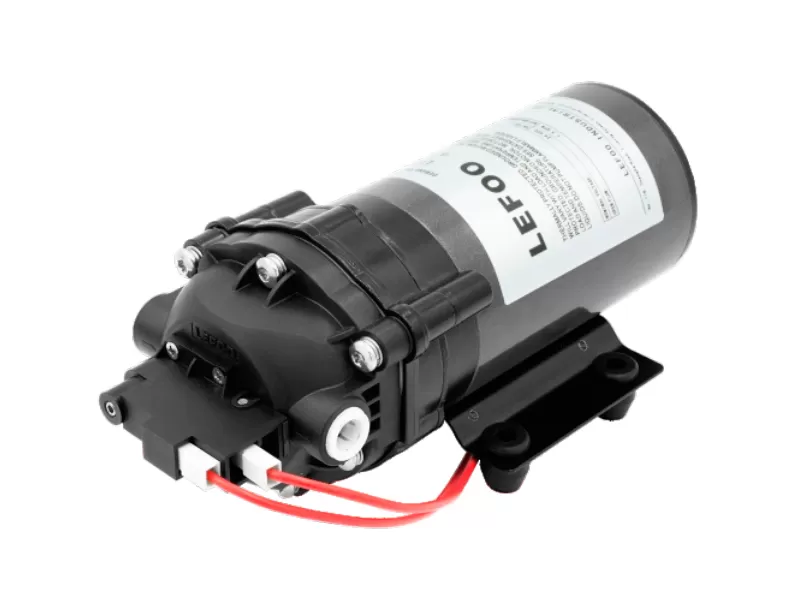
Pressure control is also relevant to water treatment and fluid-handling equipment. A 24v dc booster pump can be used where compact DC-powered water pressurization is required, including RO and related water treatment equipment.
LEFOO's 24V DC RO booster pump range includes multiple flow and pressure configurations. For example, the LFP75GPD series includes models operating at 24V DC, with working pressure around 0.5 MPa and different flow, current and bypass-pressure specifications depending on the model.
For larger-capacity applications, LEFOO also offers 24V DC booster pumps in higher GPD configurations, with models reaching working flow rates of several liters per minute.
This illustrates why pressure control and fluid-handling components should be selected as part of the complete system rather than as isolated components.
Before purchasing a pressure switch, define the application requirements clearly.
First, identify the medium. Air, water, refrigerant and other media may require different switch constructions and compatible materials.
Second, define the operating pressure. The normal working pressure should fall comfortably within the switch's specified range.
Third, determine the differential. For compressor applications, the required cut-in and cut-out pressures determine the appropriate differential.
Fourth, check the electrical load. Voltage, current and contact arrangement must match the equipment being controlled.
Finally, consider the application environment. HVAC, refrigeration, cleanroom, water treatment and industrial equipment can have very different temperature, humidity and installation requirements.
A supplier with multiple pressure-control and sensing categories can also make system integration easier. LEFOO's portfolio covers mechanical pressure switches, differential pressure switches, pressure transmitters, flow products, actuators and several pump categories.
For OEMs and equipment manufacturers, component performance is only one part of supplier selection. Product range, technical documentation, application support and customization capability can also influence long-term integration.
LEFOO combines pressure switches and sensing products with pumps, actuators and other fluid-control components. Its product portfolio covers applications including HVAC, cleanroom, refrigeration, building automation and water and wastewater systems.
This broader product structure allows engineers to evaluate pressure control and fluid-handling requirements together when developing or upgrading equipment.
Choosing the correct pressure switch requires more than matching a pressure number. Engineers should evaluate pressure range, differential, medium, electrical rating, environmental conditions and application requirements together.
For air compressors, understanding switch diff and correct cut-in/cut-out settings is essential. For HVAC systems, an air differential pressure switch can monitor pressure differences across filters, fans and ducts. In refrigeration, dedicated high-pressure controls support safer system operation, while a 24v dc booster pump can address compact water pressurization requirements.
With a broad portfolio of pressure switches, sensors and fluid-handling products, LEFOO can support OEMs and system designers looking for integrated pressure control and fluid management solutions.
What does switch diff mean?
Switch diff generally refers to the pressure difference between the cut-in and cut-out points of a pressure switch.
Can I use an air pressure switch for HVAC?
It depends on the application. HVAC systems often require a dedicated differential pressure switch designed for air pressure monitoring and the required pressure range.
How do I choose a pressure switch for an air compressor?
Check the compressor's cut-in and cut-out pressures, differential, electrical load, connection and operating environment before selecting a model.
What is an air differential pressure switch used for?
It monitors the pressure difference between two points and can be used for filter, fan, ventilation, cleanroom and duct pressure monitoring.
Does LEFOO supply 24V DC booster pumps?
Yes. LEFOO offers multiple 24V DC RO booster pump and brushless booster pump configurations for water treatment and related applications.



 Log in
  English
  日本語
日本語  한국어
한국어  français
  Deutsch
  Español
  italiano
  русский
  português
  العربية