
In industrial equipment, pressure control is rarely a single-function task. A machine may need to detect a pressure limit, confirm airflow, protect a compressor, monitor a furnace, or provide continuous process data to a controller. Choosing the right sensing technology therefore affects not only component performance but also the reliability and control architecture of the finished equipment.
For OEM manufacturers, the key question is often not simply whether to use a pressure switch or transmitter. It is which function should be handled by each device, and where should it be installed in the system?
LEFOO provides mechanical pressure switches, differential pressure switches, pressure transmitters, flow products and pumps, allowing OEM engineers to evaluate pressure control as part of a complete equipment architecture.
The fundamental pressure switch function is to convert a pressure condition into an electrical switching action.
When system pressure reaches a defined setpoint, the switch changes the state of its contacts. This signal can then start or stop equipment, activate an alarm, or permit another operation to continue.
This simple principle remains valuable because many machines do not need continuous pressure data for every control function.
For example, a compressor may only need to know whether pressure has reached its operating limit. A furnace may need to confirm that an appropriate pressure difference exists before ignition. In these situations, a mechanical pressure switch can provide a direct control signal without requiring a complex measurement system.
LEFOO's portfolio includes general pressure switches, air compressor pressure switches, water pump pressure switches and differential pressure switches, covering different equipment architectures.
The comparison between a pressure switch and pressure transmitter becomes clearer when the control objective is considered.
A pressure switch generally answers:
Has the pressure reached the defined switching condition?
A pressure transmitter answers:
What is the pressure right now, and how is it changing?
A transmitter continuously converts pressure into an electrical output that can be interpreted by a controller, display or monitoring platform. This makes it suitable for applications requiring process visibility, adjustment or data analysis.
Requirement | Pressure Switch | Pressure Transmitter |
ON/OFF control | Excellent | Possible but usually unnecessary |
Pressure limit protection | Excellent | Possible |
Continuous measurement | No | Yes |
PLC/BMS monitoring | Limited | Excellent |
Trend analysis | No | Yes |
Simple safety interlock | Excellent | Less direct |
Closed-loop control | Limited | Excellent |
Cost-sensitive switching | Often suitable | May be excessive |
Therefore, pressure transmitter and pressure switch technologies should not necessarily be viewed as competing products. In sophisticated OEM equipment, they can perform complementary functions.
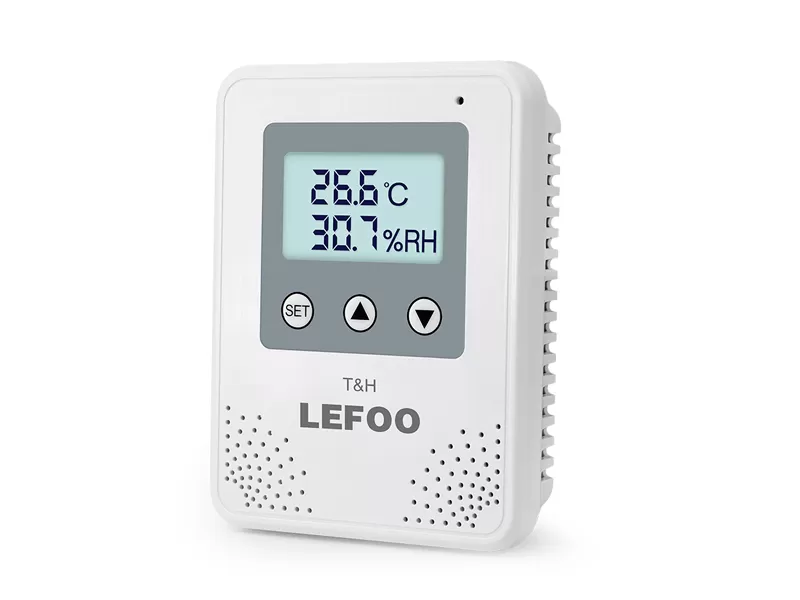
The question “air compressor pressure switch how it works” is especially relevant to OEM compressor manufacturers.
A typical compressor system needs to maintain pressure within a defined operating range. When pressure falls to the lower switching point, the pressure switch can signal the compressor to operate. When pressure reaches the upper switching point, the switch can change state and stop or control the compressor.
The advantage is straightforward: the switch provides an independent physical response to system pressure.
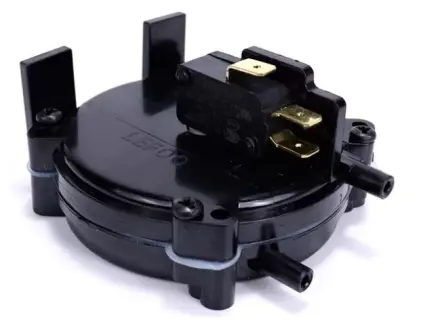
LEFOO offers several air compressor pressure switch models, including the LF08D, LF10, LF15, LF17 and LF19, as well as related water pump pressure switches.
For an OEM, the technical value is not simply the switch itself. The switch becomes part of the machine's pressure-control strategy, helping establish repeatable operating conditions across different equipment models.
A furnace provides a different example because the important variable may be pressure difference, rather than absolute system pressure.
A furnace differential pressure switch compares pressure at two points. The resulting differential can be used to confirm an airflow or combustion-related condition before another operation is permitted.
LEFOO's LF31 Differential Furnace Pressure Switch is designed for HVAC applications where air proving is important. Its specified media include air, products of combustion and natural gas, with an operating pressure range from 0.15 to 34 in. W.C. and a tube connection designed for the product's pressure ports.
This illustrates an important OEM design principle: the measurement location can be as important as the pressure range.
In furnace applications, pressure switch tubing furnace arrangements connect the pressure switch to the relevant pressure measurement points.
The tubing provides the pressure path between the furnace or combustion-air system and the switch. Its routing, connection and installation position therefore influence how accurately the switch receives the intended pressure signal.
For the LEFOO LF31, the product specification identifies a φ6.4 mm tube connection.
For OEM equipment design, engineers should consider tubing length, routing, connection security, potential condensation, heat exposure and the actual pressure reference points. The goal is not merely to install the switch but to ensure that the switch receives a representative pressure signal under real operating conditions.
Consider a gas-fired warm-air furnace manufacturer developing a new equipment platform.
The system needs to confirm that an appropriate pressure condition exists before proceeding with a controlled operation. A differential furnace pressure switch can provide this discrete confirmation.
The engineering logic can be structured as:
Pressure points → tubing → differential pressure switch → control circuit → furnace operation
In this architecture, a transmitter may not be necessary if the machine only requires a pass/fail pressure condition.
The value comes from matching the sensing technology to the control requirement. A simple switching function can reduce unnecessary electronic complexity while still providing an important equipment-control signal.
The LF31 is specifically listed by LEFOO for applications including HVAC, cleanroom, refrigeration and building automation.
A more advanced compressor platform may require both discrete protection and continuous data.
In this case, an OEM could assign different functions to different components:
Pressure switch: independent high/low pressure protection or control.
Pressure transmitter: continuous pressure feedback.
Controller: interprets transmitter data and manages operating parameters.
Alarm system: uses measured pressure trends to identify abnormal conditions.
This architecture can provide more information than a pressure switch alone while preserving a straightforward switching mechanism for critical control functions.
LEFOO's product range reflects this broader architecture, with both compressor pressure switches and general/process pressure transmitters available across its portfolio.
Pressure control is also important in agricultural water systems. The water pump agriculture use scenario can include irrigation, greenhouse water distribution, filtration and nutrient-management systems.
In a basic irrigation machine, a pressure switch can provide a simple pump control or protection function. In a more advanced agricultural system, a pressure transmitter can continuously monitor pipeline pressure and provide feedback to an automation controller.
LEFOO's agriculture application information describes booster pumps for irrigation systems and pressure transmitters for irrigation networks, filtration units and water distribution systems.
This creates two different levels of equipment design:
Basic system: Pump + pressure switch → simple pressure control.
Smart system: Pump + pressure transmitter + controller → continuous monitoring and automated optimization.
For OEMs developing agricultural equipment, this distinction makes it easier to create different product tiers without completely redesigning the fluid system.
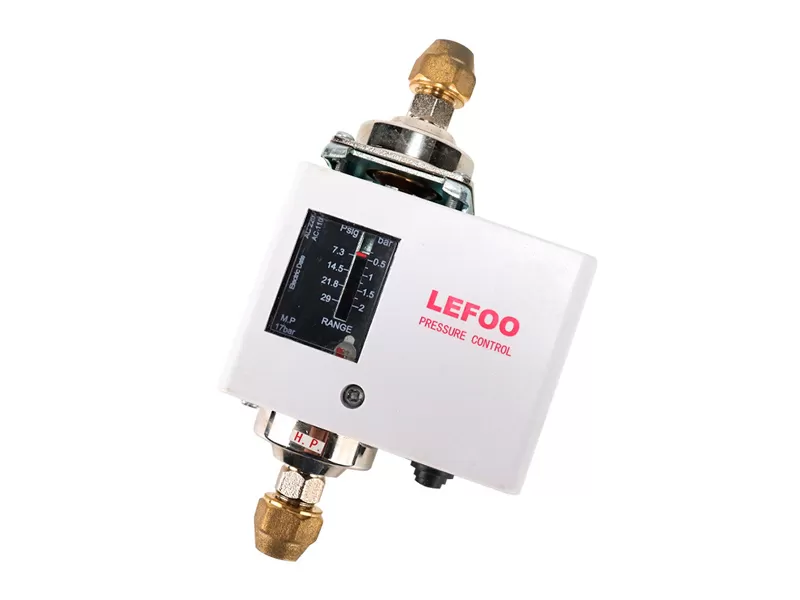
Instead of selecting components according to price alone, OEM engineers should evaluate the technical role of each device.
If the requirement is simply to trigger an action at a pressure threshold, a pressure switch may be sufficient.
If pressure trends, remote monitoring or closed-loop control are required, a transmitter becomes more appropriate.
For differential applications, engineers need to identify exactly where the high- and low-pressure signals originate.
Temperature, vibration, moisture, combustion products and chemical exposure can affect component selection.
For OEM production, dimensions, connections, electrical interfaces, documentation and repeatability are as important as nominal pressure specifications.
The technical value of a pressure component is ultimately determined by how well it performs within the finished equipment.
A pressure switch can provide a reliable discrete decision. A transmitter can turn pressure into useful process data. A differential switch can verify a critical pressure relationship. A pump can establish the fluid flow and pressure required by the system.
This is why LEFOO positions its portfolio across pressure control, sensing and fluid-handling technologies rather than treating each component as an isolated product category. Its current product structure includes mechanical pressure switches, differential pressure switches, pressure transmitters, pumps and other sensing products.
For OEM manufacturers, this broader portfolio can support a more consistent approach to component selection, system integration and future product upgrades.
The difference between a pressure switch and a pressure transmitter is ultimately a difference in control function and information value.
A switch provides a defined electrical response when pressure reaches a set condition. A transmitter provides continuous measurement that can be used for monitoring, automation and diagnostics. In furnace equipment, a differential pressure switch can verify airflow or pressure conditions through dedicated tubing connections. In compressors, switching and continuous measurement can be combined to provide both protection and intelligent control. In agricultural water systems, the same principles can support anything from basic pump control to automated irrigation.
For OEM equipment manufacturers, the strongest solution is therefore not always the most sophisticated component. It is the component architecture that provides the right level of information, protection and control for the machine's actual requirements.
With pressure switches, differential pressure products, pressure transmitters and fluid-handling solutions, LEFOO can support OEM engineers in developing equipment around practical, application-specific pressure and fluid control requirements.
What is the main pressure switch function?
A pressure switch detects whether pressure has reached a defined setpoint and changes its electrical state to control or protect equipment.
What is the difference between a pressure switch and a pressure transmitter?
A pressure switch normally provides a discrete ON/OFF response, while a pressure transmitter continuously measures pressure and provides an electrical output for monitoring or control.
Why is a differential pressure switch used in a furnace?
It can verify the pressure difference between two points, helping equipment confirm an appropriate airflow or combustion-related operating condition.
Why is tubing important for a furnace pressure switch?
The tubing transfers pressure from the measurement points to the switch. Incorrect routing, connection or installation can affect the pressure signal received by the device.
Can pressure switches and transmitters be used together?
Yes. An OEM system can use a pressure switch for independent protection or switching and a transmitter for continuous measurement and control.



 Log in
  English
  日本語
日本語  한국어
한국어  français
  Deutsch
  Español
  italiano
  русский
  português
  العربية