
Chemical dosing is different from ordinary water transfer. A transfer pump is generally selected to move a required volume of liquid from one location to another, while a dosing pump must deliver a controlled and repeatable amount of chemical into a process. The fluid may also be corrosive, viscous, concentrated, or sensitive to contamination.
So, which pump is suitable for chemical dosing?
For most low- to medium-flow dosing applications, a peristaltic pump is a strong option because the chemical remains inside the tube and does not contact the main pump mechanism. For agricultural irrigation, water treatment, and mobile equipment, compact DC-driven dosing pumps can also simplify integration with controllers and low-voltage power systems.
LEFOO offers peristaltic pumps, diaphragm booster pumps, and other fluid-handling products that can be configured for different dosing, transfer, and water-pressure requirements.
A suitable chemical dosing pump needs more than sufficient flow capacity. Engineers should evaluate at least six parameters:
Required dosing flow rate
Chemical compatibility
Discharge pressure
Dosing accuracy and repeatability
Operating cycle and duty time
Power and control requirements
Chemical compatibility is particularly important. Acids, alkalis, fertilizers, disinfectants, and other treatment chemicals can attack unsuitable wetted materials.
A peristaltic design has a major advantage in this area: only the tubing contacts the pumped liquid. LEFOO describes its peristaltic pumps as suitable for chemical dosing because they provide a contained fluid path, repeatable flow, and relatively simple tube replacement.
This makes the pump architecture especially useful when chemical isolation and maintenance simplicity are important.
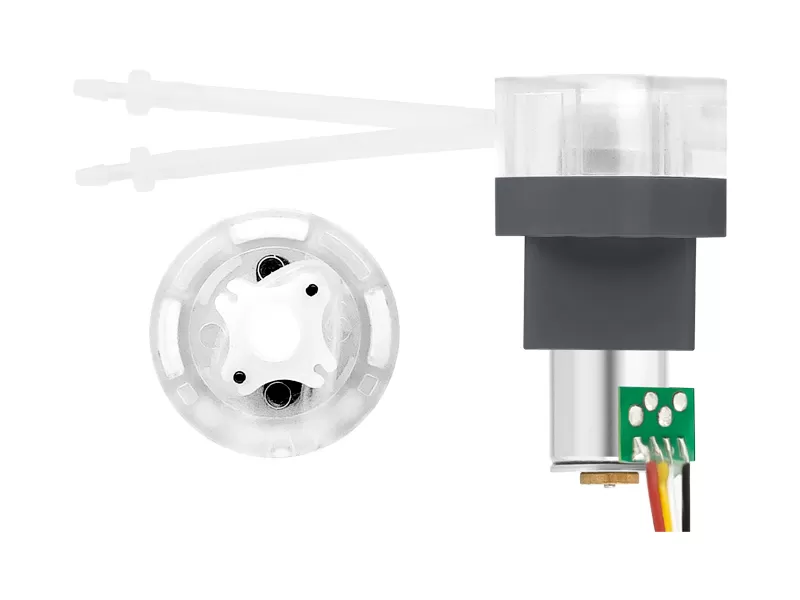
Peristaltic pumps operate by compressing flexible tubing to move fluid through the line. The pump mechanism does not directly contact the chemical.
This design offers several practical advantages for dosing:
Because the liquid is contained within the tube, the pump mechanism has less direct exposure to aggressive chemicals. The tube material can be selected according to the chemical being handled.
LEFOO provides different tubing and accessories for its peristaltic pump range, including options designed around chemical resistance and application requirements.
For fertilizer injection, pH adjustment, disinfectant dosing, and other applications, repeatability can be more important than high flow.
LEFOO's peristaltic pump portfolio includes fixed-flow DC pumps as well as adjustable-speed systems. Some models are designed for precise flow adjustment, while the LFPC302ST supports functions such as speed regulation, calibration, timed operation, and fixed-quantity dispensing.
Tubing is a consumable component in many peristaltic systems. Instead of rebuilding a complicated wetted pump chamber, maintenance can often focus on inspecting or replacing the tube.
This is valuable for distributed dosing equipment where maintenance time needs to be minimized.
A common mistake is treating every chemical-handling requirement as a dosing-pump requirement.
A peristaltic pump is generally better when the main objective is controlled chemical metering.
A booster pump is more appropriate when the primary objective is increasing water pressure or supplying a stable flow.
Requirement | More suitable pump type |
Precise chemical injection | Peristaltic pump |
Fertilizer dosing | Peristaltic pump |
pH adjustment | Peristaltic pump |
Disinfectant dosing | Peristaltic pump |
Water pressure boosting | Diaphragm booster pump |
RO water supply | Booster pump |
Irrigation pressure stabilization | Booster pump |
Chemical transfer at higher volume | Application-dependent |
This distinction becomes important when designing agricultural systems. A dosing pump may inject fertilizer into an irrigation line, while a separate booster pump maintains the water pressure required by the irrigation system.
LEFOO's agriculture solutions follow this broader system approach, combining booster pumps for stable irrigation pressure with peristaltic pumps for controlled nutrient injection.
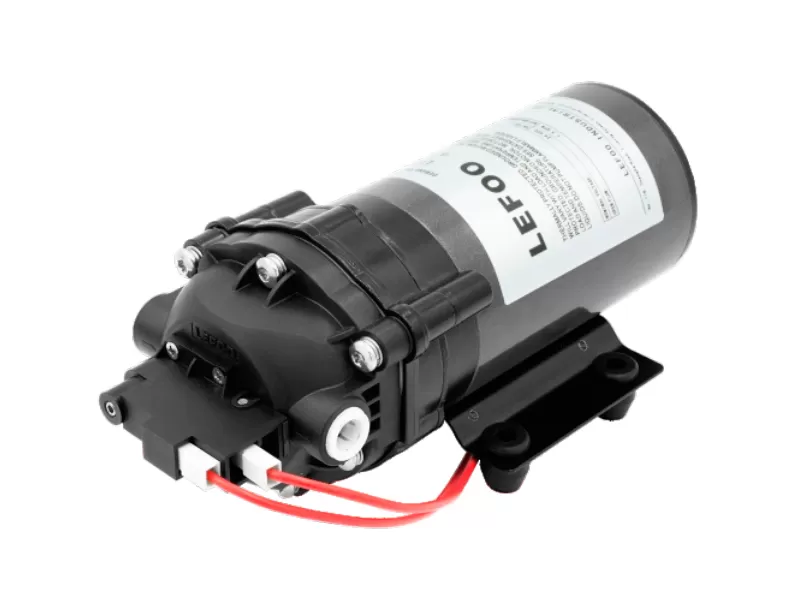
A 24v booster pump should not normally be selected simply because a system needs chemical dosing. Its main value is supplying or increasing fluid pressure.
For mobile agricultural equipment, compact water-treatment systems, and equipment powered by batteries or other low-voltage sources, a 24v dc booster pump can be attractive because it can be integrated into a low-voltage electrical architecture.
For example, an agricultural system may use:
Water source → 24V booster pump → irrigation line → peristaltic chemical dosing pump → crop area
In this configuration, the booster pump handles water delivery while the peristaltic pump controls the chemical injection rate.
This separation allows each pump to perform the function it is best suited for rather than forcing one pump to handle both pressure boosting and precision dosing.
Agriculture is one of the clearest examples of why dosing and water delivery should be considered separately.
An agricultural irrigation water pump is primarily responsible for moving irrigation water. Its selection depends on flow demand, pressure, lift, piping resistance, and irrigation equipment.
Chemical dosing introduces a second requirement. Fertilizer, nutrients, pH-adjusting chemicals, or crop-treatment liquids may need to be injected at a controlled rate.
LEFOO's agriculture application information identifies peristaltic pumps for fertilizer and nutrient injection, pH adjustment, and additive dosing in irrigation systems.
A typical system can therefore contain:
1. Agricultural irrigation water pump – supplies the main water flow.
2. Pressure monitoring – confirms that the irrigation system operates within the expected pressure range.
3. Peristaltic dosing pump – injects the required quantity of chemical.
4. Controller – coordinates dosing with irrigation cycles.
5. Injection point and mixing section – ensures the chemical is distributed through the irrigation water.
This architecture is easier to scale because water delivery and chemical metering can be independently adjusted.
The term agricultural chemical transfer pumps covers a broader category than precision dosing pumps.
If the objective is simply transferring a large quantity of agricultural chemical between a storage tank and another container, high-volume transfer performance may be more important than extremely precise metering.
If the same chemical must be injected continuously into an irrigation line at a controlled rate, a dosing-oriented pump is usually more appropriate.
The distinction can be summarized as:
Transfer = move the chemical
Dosing = meter the chemical
Injection = introduce the chemical into another process stream
Understanding this difference prevents over-specifying a pump for a simple transfer job or under-specifying a pump for precision treatment.
Solar-powered systems create another design challenge because power availability changes with sunlight and system conditions.
Solar chemical pumps can be considered where grid power is unavailable or where independent agricultural infrastructure is required.
However, the pump should not be selected based only on the solar panel's nominal power. The designer should consider:
Available solar energy
Battery capacity, if used
Required dosing rate
Operating hours
Chemical concentration
Injection pressure
Controller compatibility
Required dosing consistency
In many systems, the dosing pump and irrigation water pump may have different power requirements. A solar architecture therefore needs to ensure that both the main water delivery and chemical injection functions remain stable under realistic operating conditions.
A practical selection sequence is:
Check concentration, viscosity, temperature, corrosiveness, and compatibility with tubing and connectors.
Determine whether the application requires a few milliliters per minute, hundreds of milliliters per minute, or a substantially higher flow.
The pump must overcome the pressure at the injection point. A pump that provides accurate flow at zero pressure may not provide the same performance against system back pressure.
Fixed-speed DC pumps may be sufficient for simple dosing. Adjustable-speed or stepper-driven systems can provide greater control where dosing conditions change.
For agricultural and mobile equipment, low-voltage solutions such as 12V or 24V booster pump configurations may simplify electrical integration. LEFOO's peristaltic pump portfolio also includes DC 12V and DC 24V models for specific applications.
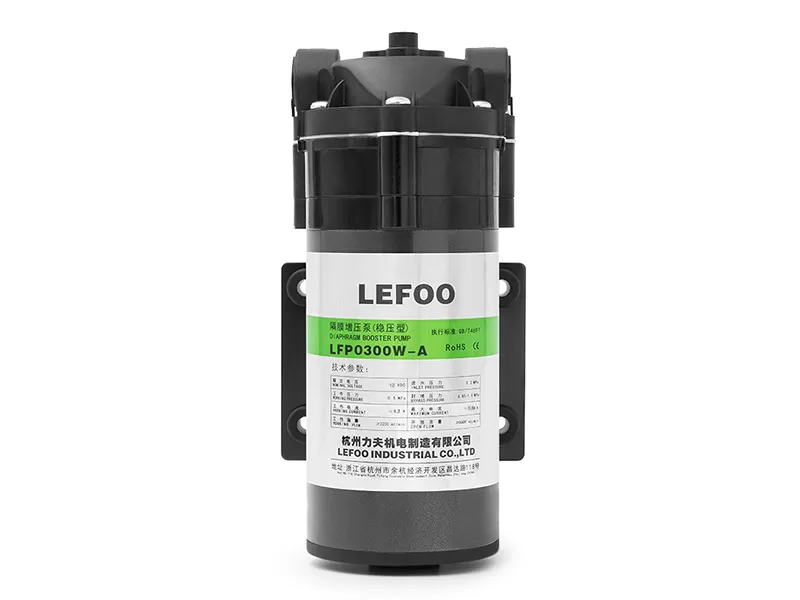
Chemical dosing is rarely an isolated pump problem. The final equipment may need water delivery, chemical metering, pressure monitoring, flow management, and automated control.
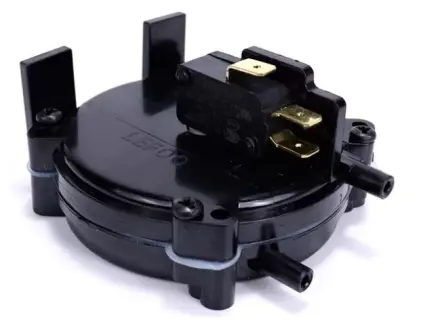
LEFOO's product portfolio covers peristaltic pumps for precise dosing as well as booster pumps and pressure-sensing products for water and fluid systems. Its agriculture applications specifically combine stable irrigation pumping with precise nutrient and additive dosing.
For OEMs, this makes it possible to evaluate the pump according to the complete system architecture rather than selecting a component only from its nominal flow rate.
For many low- and medium-flow applications requiring controlled and repeatable dosing, a peristaltic pump is a practical choice. Chemical compatibility, flow rate, pressure, and tubing material should still be verified for the specific chemical.
A 24V booster pump is primarily designed for pressure boosting and fluid delivery. For precise chemical metering, a peristaltic dosing pump is generally more appropriate.
Peristaltic pumps are commonly used for fertilizer and nutrient injection because their flow can be controlled and the chemical remains contained within the tubing. LEFOO identifies fertilizer and nutrient injection as an agricultural application for its peristaltic pumps.
They can be suitable for off-grid or low-power agricultural systems, but the pump, controller, energy storage, and solar supply must be sized according to the required dosing rate and operating schedule.
A transfer pump is primarily designed to move chemical from one location to another, while a dosing pump is designed to deliver a controlled quantity into a process.



 Log in
  English
  日本語
日本語  한국어
한국어  français
  Deutsch
  Español
  italiano
  русский
  português
  العربية