
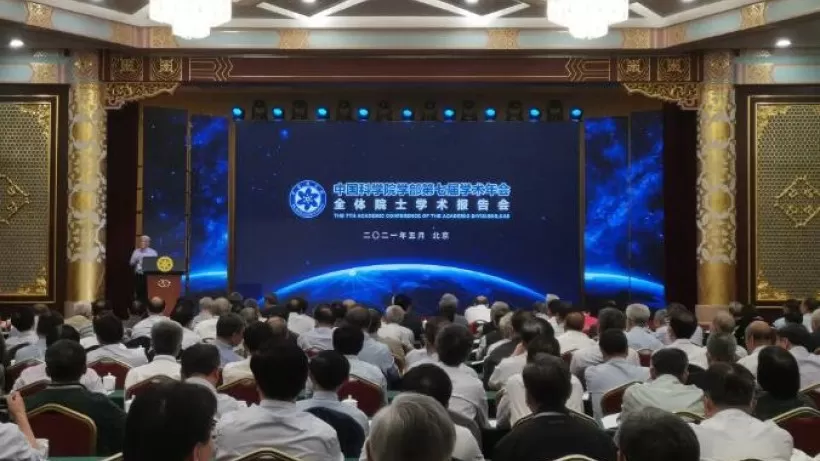
At the 7th Annual Conference of the Chinese Academy of Sciences, Ding Zhongli, an academician of the Chinese Academy of Sciences, gave a special report entitled "Research on China's "Carbon Neutrality" Framework Roadmap", introducing the recent developments of the Chinese Academy of Sciences around the issue of carbon neutrality. Consulting the progress of the project. Zhejiang LEFOO Pressure Control and Sensing Technology Expert.
Carbon neutrality refers to anthropogenic emissions (fossil fuel utilization and land use) caused by man-made effects (wood accumulation, soil organic carbon, engineering storage, etc.) and natural processes (ocean absorption, carbon burial in the erosion-sediment process, alkaline soil Carbon sequestration, etc.), that is, net zero emissions. In 2019, global carbon emissions amounted to 40.1 billion tons of carbon dioxide, 86% of which came from the use of fossil fuels, and 14% came from land use changes. These emissions are ultimately absorbed by 31% of terrestrial carbon sinks, 23% by ocean carbon sinks, and the remaining 46% is retained in the atmosphere. Carbon neutrality is to find a way to reduce or absorb the carbon dioxide that would otherwise be trapped in the atmosphere.
So far, some EU member states have taken the lead in committing to achieving carbon neutrality by 2050. my country also pledged in September 2020 to "strive to reach the peak of carbon dioxide emissions by 2030, and strive to achieve carbon neutrality by 2060." Judging from the historical relationship between carbon emissions and economic growth in major developed countries, a country's level of development is closely related to per capita cumulative carbon emissions. As far as my country is concerned, per capita cumulative carbon emissions are far lower than those of major developed countries and also smaller than the global average. Our pursuit of achieving carbon neutrality by 2060 is far more difficult than in developed countries.
In response to the scientific and technological needs in the issue of carbon neutrality, the Faculty of the Chinese Academy of Sciences established a major consulting project "China Carbon Neutrality Framework Roadmap Research". The goal is to design a preliminary roadmap for discussion, revision, and improvement. At the same time, how to implement the "roadmap" ", put forward suggestions at the operational level. Academician Ding Zhongli pointed out in the report that carbon neutrality seems to be very complicated, but in summary it is a "three-terminal force" system:
The first end is the energy supply end, where possible, use non-carbon energy to replace fossil energy for power generation and hydrogen production, and build a "new power system or energy supply system";
The second end is the energy consumption end, striving to achieve the replacement of fossil energy consumption by non-carbon energy such as electricity, hydrogen energy, geothermal energy, and solar energy in most areas such as residential life, transportation, industry, agriculture, and construction;
The third end is the end of man-made carbon sequestration, which removes the carbon dioxide that has to be emitted through a combination of ecological construction, soil carbon sequestration, and carbon capture and storage.
In short, it is to choose appropriate technical means to achieve "carbon reduction and carbon fixation" and gradually achieve carbon neutrality.
The academician believes that the process of "carbon neutrality" is both a challenge and an opportunity. The process will be a major economic and social transformation, and it will be a major change involving a wide range of fields. "Technology is king" will be fully realized in this process. Reflected; in this round of "great transformation", the energy structure, energy consumption, and man-made carbon sequestration need to be "strengthened" at the three ends. The required funds will be astronomical, and it will never be met by government financial subsidies, and we must adhere to the market orientation. Encourage competition and steadily advance. In this process, it is especially necessary to prevent the obvious rise of energy prices, which affects residents' lives and product exports.
Ding Zhongli said that the project team believes that my country's academia should uphold an open attitude, participate extensively, and display imagination and creativity; the relevant state departments may consider going through a period of "contending of a hundred schools of thought" when determining the roadmap, and don't rush. Close your mouth". He also suggested that in-depth studies should be conducted on issues such as the distribution of future emission rights and the verification of carbon emissions reports. In terms of scientific and technological support, there are still many basic scientific issues such as the sensitivity of carbon dioxide to warming that need to be studied in depth. On the issue of carbon neutrality, the scientific and technological community still has a long way to go.
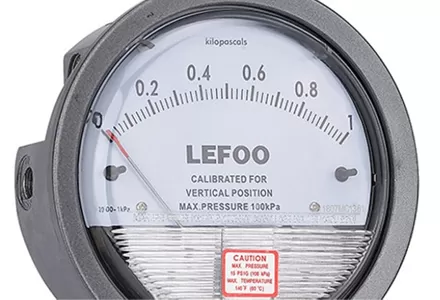
pressure sensor transducer transmitter meter





 Log in
  English
  日本語
日本語  한국어
한국어  français
  Deutsch
  Español
  italiano
  русский
  português
  العربية