
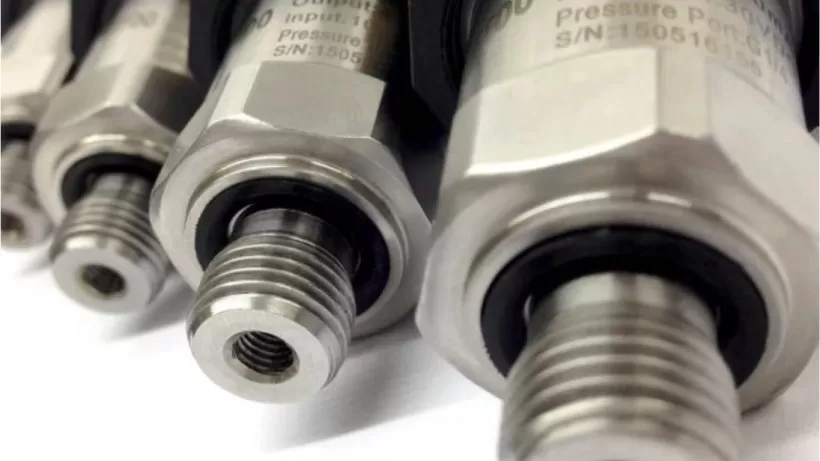
In modern heating, ventilation, air conditioning, and refrigeration (HVAC/R) systems, maintaining precise control over temperature and pressure is essential for efficiency, safety, and comfort. Behind the scenes, pressure sensors are the key components that make this possible.
They monitor refrigerant and air pressures, detect system irregularities, and communicate with controllers to optimize energy use. Without reliable pressure sensing, even the most advanced HVAC or refrigeration system can suffer from performance issues, energy waste, or equipment damage.
Lefoo, a leading manufacturer of industrial-grade sensors, provides advanced pressure solutions that support accurate measurement, system stability, and long-term reliability in HVAC and refrigeration applications.
Pressure sensors in HVAC/R applications perform several critical functions:
Refrigerant monitoring: Measuring high and low side pressures in cooling circuits.
System protection: Detecting overpressure or vacuum conditions that may cause compressor failure.
Efficiency optimization: Ensuring compressors and fans operate only when needed.
Leak detection: Identifying refrigerant loss early to prevent environmental damage and performance loss.
By delivering continuous feedback to control systems, sensors enable real-time adjustments that improve both performance and energy efficiency.
HVAC and refrigeration systems use different sensor types depending on the medium (air or refrigerant) and the application's pressure range.
Common types include:
Absolute pressure sensors: Measure pressure relative to a vacuum, often used in sealed refrigerant systems.
Gauge pressure sensors: Compare the measured pressure with atmospheric pressure — typical for air ducts and compressors.
Differential pressure sensors: Measure pressure difference between two points, ideal for airflow and filter monitoring.
Lefoo's product range includes all three types, offering flexibility for OEM manufacturers and maintenance engineers across multiple HVAC/R designs.
In refrigeration systems, maintaining the right refrigerant pressure is critical for efficient cooling and compressor protection.
Pressure sensors are typically placed:
On the compressor discharge line to monitor high-side pressure.
On the suction line to track low-side pressure.
In the liquid line to ensure proper flow toward the expansion valve.
If pressure levels exceed safe limits, sensors trigger safety shutoffs or alarms, preventing mechanical failure or refrigerant leaks.
Lefoo's refrigeration-grade pressure transducers are designed to handle a wide range of refrigerants, including R134a, R404A, R410A, and CO₂, while maintaining stable operation under vibration, temperature changes, and high humidity.
In HVAC systems, pressure sensors regulate both refrigerant and airflow pressure.
They are essential for:
Compressor control, ensuring balanced operation between high and low sides.
Expansion valve management, optimizing refrigerant flow for stable temperature output.
Airflow monitoring, maintaining balanced pressure across ducts and filters.
By integrating sensors with advanced controllers, systems automatically adapt to environmental conditions and occupancy levels, minimizing energy waste while maintaining indoor comfort.
Energy efficiency is one of the top priorities in HVAC and refrigeration systems. Compressors, fans, and pumps consume large amounts of energy — but with accurate pressure feedback, their operation can be fine-tuned to use only what's necessary.
Pressure sensors enable:
Variable-speed drive (VSD) control for compressors and fans.
Demand-based operation, turning off components when not needed.
Optimized refrigerant charge, improving system performance.
Studies show that using sensor-controlled compressors can reduce energy consumption by 15–25% in commercial HVAC systems.
Lefoo sensors are engineered for low drift and high repeatability, ensuring consistent performance that supports long-term energy savings.
Clean air is essential in both residential and industrial HVAC systems. Differential pressure sensors are used to monitor air filters and detect when they become clogged.
When the pressure drop across a filter exceeds a set limit, the sensor sends an alert to replace or clean the filter.
This simple yet effective function:
Prevents reduced airflow.
Improves indoor air quality.
Reduces strain on fans and motors, saving energy.
Lefoo's compact differential pressure sensors are designed for air-handling units (AHUs), ducts, and cleanroom systems — providing precise measurement even at very low pressures.
Modern HVAC/R systems are becoming smarter through IoT (Internet of Things) integration. Pressure sensors now communicate directly with cloud-based control platforms, allowing real-time monitoring and remote management.
Key advantages include:
Predictive maintenance – Detects early warning signs of compressor wear or refrigerant leaks.
System optimization – Uses data analytics to fine-tune performance.
Remote diagnostics – Reduces on-site maintenance costs.
Lefoo's smart pressure sensors support digital outputs (I²C, SPI, Modbus) for easy integration into building automation systems (BAS) and smart HVAC platforms.
Refrigeration systems often operate under extreme temperature fluctuations and exposure to moisture or vibration.
Lefoo addresses these challenges by using:
Corrosion-resistant stainless steel for wetted parts.
Hermetically sealed electronics to prevent moisture ingress.
Wide temperature range operation from -40°C to +125°C.
These features ensure long service life and reliability, even in commercial refrigeration units, cold storage rooms, and outdoor HVAC equipment.
Global environmental regulations now restrict the use of high-GWP (Global Warming Potential) refrigerants. As systems transition to low-GWP alternatives, pressure monitoring becomes even more critical due to new refrigerants' higher operating pressures and stricter control requirements.
Pressure sensors help maintain system safety and ensure compliance with international standards such as:
EN378 (EU)
ASHRAE 15 (USA)
F-Gas Regulation
Lefoo supports OEMs in meeting these standards by offering sensors compatible with modern eco-friendly refrigerants like R32, R1234yf, and CO₂.
Over the next decade, the HVAC and refrigeration industries will continue to evolve toward smarter, greener, and more efficient technologies.
Pressure sensors will play an increasingly important role in:
AI-based control systems, learning from sensor data to optimize performance.
Wireless sensor networks, reducing installation complexity.
Sustainable materials, minimizing environmental impact.
Lefoo's continuous investment in innovation ensures it remains at the forefront of this transformation — delivering reliable, energy-efficient, and future-ready pressure sensing solutions.
Pressure sensors are the foundation of precision and efficiency in HVAC and refrigeration systems. They enable accurate monitoring, enhance energy efficiency, protect equipment, and ensure comfort and safety for users.
From filter monitoring to refrigerant control, Lefoo pressure sensors deliver the stability, durability, and intelligence that modern systems demand.
As the world moves toward smarter and more sustainable climate technologies, Lefoo continues to develop innovative solutions that set the standard for performance, reliability, and environmental responsibility in the HVAC/R industry.



 Log in
  English
  日本語
日本語  한국어
한국어  français
  Deutsch
  Español
  italiano
  русский
  português
  العربية