
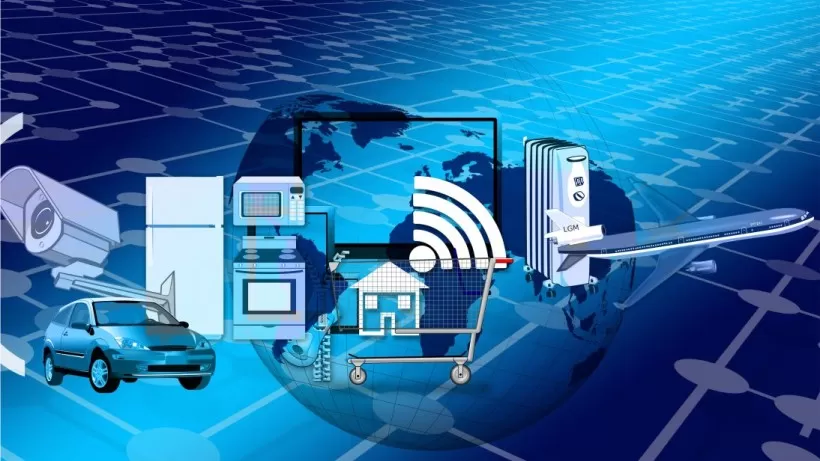
The world of manufacturing is undergoing a digital revolution driven by the Industrial Internet of Things (IIoT) — a network of smart devices that collect, share, and analyze data in real time. At the heart of this transformation are sensors, particularly pressure sensors, which provide critical data that power intelligent decision-making and automation.
By integrating pressure sensors with Industrial IoT systems, companies can gain real-time visibility into pressure conditions, optimize energy use, prevent equipment failures, and improve overall process efficiency. With decades of engineering experience, Lefoo pressure sensors are designed to meet the growing demands of smart factories and connected industries worldwide.
Pressure sensors play a fundamental role in industrial systems — measuring the force of gases or liquids and converting it into electrical signals for monitoring and control. In the context of IIoT, these readings become digital data streams that can be collected, analyzed, and shared instantly across connected platforms.
This real-time insight allows operators to maintain optimal operating conditions, identify anomalies before they escalate, and automatically adjust processes without manual intervention. For example, a pressure sensor in a compressor can detect small pressure deviations and alert maintenance teams before system efficiency drops or failures occur.
Lefoo pressure sensors provide precise, stable, and reliable data, making them ideal for integration into connected systems across industries such as HVAC, water treatment, manufacturing, and energy management.
Traditionally, pressure monitoring required manual readings or localized control systems. With IoT integration, data from pressure sensors is now transmitted wirelessly or through industrial networks to centralized cloud platforms.
This enables:
Real-Time Monitoring: Pressure data is continuously updated, giving operators instant visibility into system performance.
Remote Access: Engineers can monitor equipment from any location, improving operational flexibility and responsiveness.
Predictive Maintenance: By analyzing sensor data over time, systems can detect early warning signs of wear or malfunction.
Automated Control: Smart systems automatically adjust valves, pumps, or compressors to maintain desired pressure levels.
Data-Driven Decision Making: Detailed analytics help optimize resource use and improve long-term performance.
This shift from manual to real-time pressure monitoring marks a new era of efficiency, precision, and intelligence in industrial operations.
1. Increased Efficiency
Continuous pressure monitoring ensures systems operate within ideal parameters, reducing waste and improving process output.
2. Enhanced Safety
Accurate and timely pressure readings help prevent overpressure conditions, leaks, and hazardous failures.
3. Reduced Downtime
Predictive analytics allow maintenance to occur only when necessary, minimizing unplanned shutdowns and extending equipment life.
4. Energy Optimization
IoT systems can automatically regulate pressure to reduce energy consumption in pumps, compressors, and HVAC units.
5. Improved Data Visibility
With centralized dashboards and analytics tools, engineers can visualize performance trends and identify areas for improvement.
6. Scalability and Integration
Lefoo sensors are compatible with major communication standards, enabling easy integration into industrial networks such as Modbus, CAN, and MQTT for IoT platforms.
HVAC and Building Automation
Pressure sensors integrated with IoT platforms monitor air and refrigerant pressure, ensuring efficient cooling and heating cycles. Data is used to optimize energy use and improve comfort.
Water Treatment and Distribution
Real-time monitoring of water pressure helps maintain stable flow, prevent leaks, and ensure consistent filtration performance.
Manufacturing and Process Control
Pressure sensors feed data into PLCs and cloud systems, improving product consistency and reducing material waste.
Air Compressor and Pneumatic Systems
IoT-enabled pressure sensors detect fluctuations, helping control air supply more precisely and reduce energy costs.
Food and Beverage Industry
Connected sensors ensure sanitary pressure control in fluid handling, packaging, and filling systems, improving both safety and quality assurance.
Lefoo has been at the forefront of pressure measurement technology for decades, offering a wide range of pressure sensors and transmitters designed for both traditional and digital environments.
Lefoo sensors feature:
High-accuracy measurement with minimal signal drift.
Rugged and compact design for industrial reliability.
Digital and analog outputs compatible with IIoT and PLC systems.
Temperature and overload protection for demanding environments.
Customizable configurations to match specific process needs.
These features make Lefoo pressure sensors the perfect foundation for data-driven operations, delivering precise measurements that enable automation, efficiency, and predictive maintenance.
Integrating pressure sensors into an IoT ecosystem begins with selecting the right sensor model and communication interface. Lefoo provides both analog output sensors (for traditional controllers) and digital communication options (for IoT platforms).
Once installed, sensor data can be connected to cloud-based monitoring software where performance metrics are displayed in real time. Advanced analytics tools use this data to identify inefficiencies, detect anomalies, and even automate system responses.
For example, if pressure in a hydraulic line drops below a set threshold, the system can automatically send alerts or adjust pump speeds. This smart feedback loop transforms passive monitoring into active process optimization, reducing manual intervention and operational risk.
As industries move toward Industry 4.0, the integration of sensors, IoT, and data analytics will continue to evolve. Pressure sensors will no longer serve only as measurement tools but as intelligent nodes that communicate, predict, and control processes autonomously.
With Lefoo's commitment to innovation and precision engineering, businesses can future-proof their operations with reliable sensing technology that supports digital transformation. From real-time monitoring to predictive maintenance, Lefoo pressure sensors provide the intelligence and stability needed to thrive in a connected industrial world.
Integrating pressure sensors with Industrial IoT is revolutionizing how industries monitor and control their systems. Real-time data, predictive analytics, and automation enable smarter decision-making, reduced energy use, and enhanced reliability.
With their proven accuracy, durable construction, and seamless connectivity, Lefoo pressure sensors empower industries to achieve next-generation efficiency and control. As smart manufacturing continues to grow, Lefoo remains a trusted partner for precise, data-driven, and intelligent pressure management solutions.



 Log in
  English
  日本語
日本語  한국어
한국어  français
  Deutsch
  Español
  italiano
  русский
  português
  العربية