
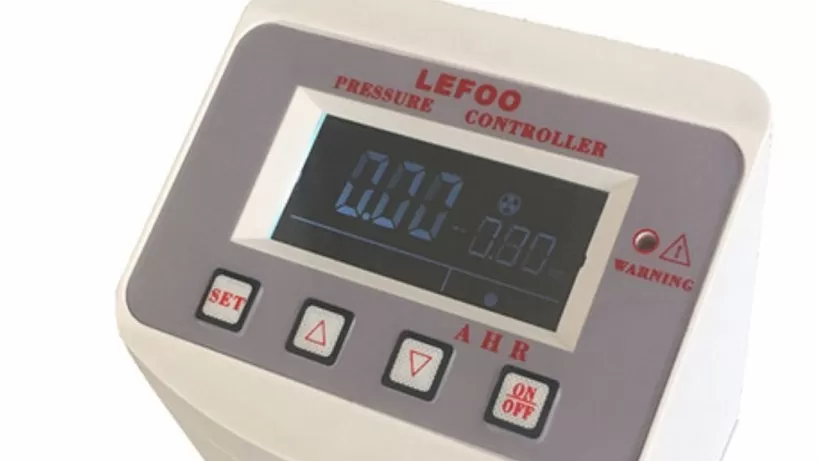
Pressure switches are essential components in modern automation, HVAC, pneumatic, and water systems. They serve a simple yet vital purpose: monitoring pressure and controlling the activation of pumps, compressors, or alarms when certain limits are reached. However, not all pressure switches are the same. With the rise of electronic technology, industries now face a key decision—choosing between digital pressure switches and mechanical pressure switches.
Understanding the differences between these two types is critical to selecting the right device for each application. Factors such as precision, durability, response time, and cost all play a role. This article explores the key characteristics, advantages, and ideal uses of both technologies, highlighting how Lefoo pressure switches meet the diverse needs of today's industrial and commercial systems.
A pressure switch detects pressure changes within a system and triggers an electrical contact when the pressure reaches a predefined threshold. This allows automatic control of pumps, compressors, valves, or alarms.
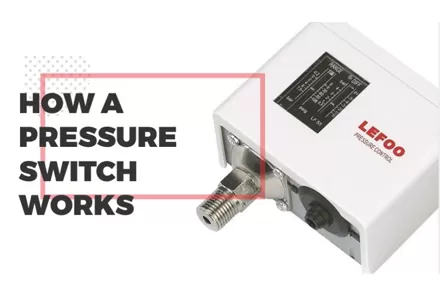
In a mechanical pressure switch, a diaphragm or piston physically reacts to pressure, activating a spring-loaded contact that opens or closes a circuit. In contrast, a digital pressure switch uses an electronic sensor and microprocessor to detect pressure changes, display readings, and send output signals with high precision.
Both designs serve the same function—monitoring and controlling pressure—but they do so using very different mechanisms, which influence their performance and applications.
Mechanical pressure switches have been used for decades and remain a reliable choice for many applications. Their operation is purely mechanical, meaning they do not require an external power source to function.
Advantages of mechanical pressure switches:
Simplicity: Their design is straightforward, easy to install, and simple to maintain.
Durability: They perform well in harsh environments, including those with dust, moisture, or vibration.
No Power Requirement: The mechanical pressure switch is ideal for systems where electrical power is limited or unavailable.
Cost-Effective: Mechanical switches are generally more affordable, making them suitable for large-scale or low-budget installations.
Limitations:
Lower accuracy compared to electronic models.
Limited adjustability and fewer output options.
Slower response time, unsuitable for rapid or dynamic pressure changes.
No digital readout or remote monitoring capability.
Mechanical switches like the Lefoo LF19 or LF42 are widely used in water pumps, air compressors, and hydraulic systems, where the main requirement is reliable on/off control within a specific pressure range. Their robust construction ensures consistent operation even after thousands of cycles.
Digital pressure switches represent the next generation of pressure control technology. Instead of relying on physical movement, they use electronic pressure sensors and microcontrollers to measure pressure accurately and provide real-time feedback.
Advantages of digital pressure switches:
High Accuracy: Electronic sensing delivers precise readings, even in small pressure variations.
Adjustability: Users can easily program cut-in and cut-out settings through digital controls.
Display and Diagnostics: Most models feature LED or LCD screens showing real-time pressure and system status.
Multiple Output Options: Can send analog or digital signals to PLCs, allowing integration with automation systems.
Faster Response Time: Ideal for processes that require quick and accurate pressure regulation.
Predictive Maintenance: Some digital models monitor performance trends, helping detect potential issues before failures occur.
Limitations:
Higher initial cost compared to mechanical switches.
Requires an electrical power supply.
More sensitive to extreme temperature or electrical interference if not properly shielded.
The Lefoo LFDS68 Digital Pressure Switch, for example, combines precision measurement with intelligent control. It's commonly used in air compressors, pneumatic systems, and industrial automation, where precise pressure management and digital monitoring are critical.
The best choice depends on the application requirements, environmental conditions, and budget.
Choose a mechanical pressure switch if:
The system requires basic on/off control.
Operating conditions involve dust, humidity, or vibration.
There's no power source available.
You need a simple and cost-effective solution.
Choose a digital pressure switch if:
You need high precision and fast response.
The application involves automation or integration with PLCs.
You require data visibility through displays or monitoring software.
Predictive maintenance and system optimization are priorities.
In many modern facilities, both technologies are used together. A mechanical switch may serve as a backup safety control, while a digital switch manages precise regulation and monitoring. This combination enhances reliability and redundancy.
Lefoo has been manufacturing pressure control products for decades, offering both mechanical and digital pressure switches designed for performance, durability, and ease of integration. Each model is tested to meet international quality standards and withstand demanding industrial environments.
The Lefoo LFDS68 digital pressure switch features a high-resolution display, user-friendly configuration, and durable housing suitable for factory automation. Meanwhile, the LF19 and LF42 mechanical switches provide dependable control for pumps and compressors. Together, these products demonstrate Lefoo's commitment to innovation and versatility in pressure management solutions.
Both digital and mechanical pressure switches play essential roles in modern industries. While mechanical switches remain a dependable solution for basic applications, digital switches offer advanced control, accuracy, and connectivity suited for today's automated systems.
By choosing the right type of Lefoo pressure switch, businesses can ensure optimal performance, energy efficiency, and system safety. Lefoo's combination of technological expertise and proven quality makes its products a preferred choice for engineers and system integrators worldwide.



 Log in
  English
  日本語
日本語  한국어
한국어  français
  Deutsch
  Español
  italiano
  русский
  português
  العربية