
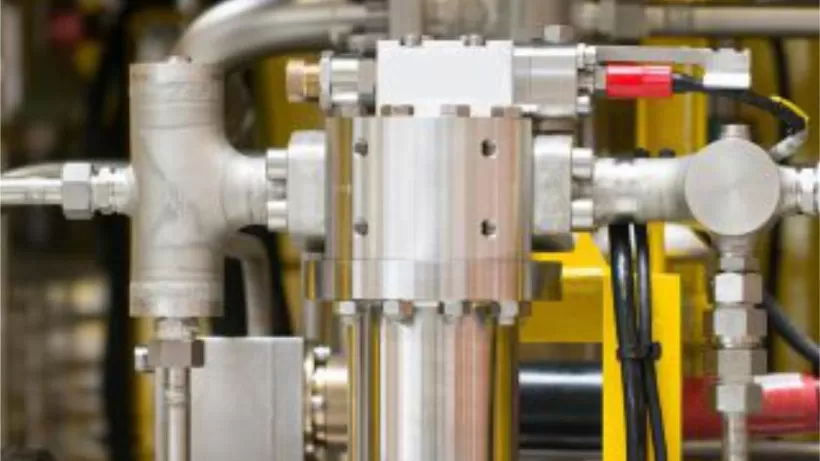
According to users, the main characteristics of the specifications of pressure transmitters according to the applications are: accuracy, reliability, durability / robustness, safety, ease of calibration, repeatability, temperature stability, easy maintenance, interchangeability, response time, support EDDL and DTM, etc.
According to the ARC - Advisory Group, the world market for pressure transmitters in 2008 was US $ 2.38 billion and an estimated 2.8 billion in 2013.
An intelligent pressure transmitter combines sensor technology and its electronics.
Normally, it should provide the following characteristics: digital output signal, digital communication interface, pressure compensation, temperature compensation, stability, it should allow easy calibration, re-range with and without reference, resourcefulness, self-diagnosis
Easy installations
Low installation and maintenance costs, short installation and maintenance time, intrusion / penetration reduction, space-saving installation, Foundation Fieldbus and Profibus PA technology upgrades, etc. Users should be aware of a few points:
Accuracy and Rangeability: if the necessary equipment has these characteristics, analyze the accuracy formulas across the range. See also other features like response time, Total, PID block, etc ... They can be more useful in applications.
Models with stability and long warranty are more expensive. Make sure your app really needs it. Normally, there are process and installation conditions, as per the requirements for that warranty to apply.
Investment protection: analyze whether the price of repairs, interchangeability between models, simplified specifications, upgrading to other technologies (Fieldbus Foundation, Profibus PA), service provision, technical support, replacement time, etc. These are factors that can interfere with the availability of the plant.
A pressure transmitter specified for critical areas, that is, for specific safety functions, is designed with low probabilities of failure and high operational reliability. There are two concepts on the market. One based on the “Prove in Use” notion and the other based on IED 61508 certification. In practice, many applications are specified with SIL certification for use with control systems, without the need for safety functions. There is also the “misinformation market” that leads to the purchase of more expensive equipment developed for safety functions that will actually be used in the process control functions, where SIL certification does not bring the expected benefits and may hinder the use and operation of the equipment.



 Log in
  English
  日本語
日本語  한국어
한국어  français
  Deutsch
  Español
  italiano
  русский
  português
  العربية