
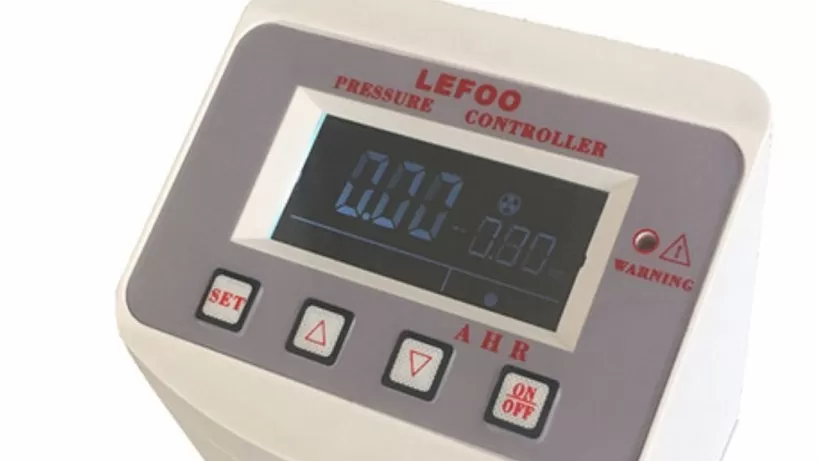
In today's competitive industrial landscape, precision, reliability, and safety are non-negotiable. Pressure sensors play a vital role in various applications, from HVAC systems to water pumps, medical devices, and automated manufacturing. Choosing the ideal pressure sensor for your specific use case can significantly enhance performance, reduce maintenance, and prevent costly failures.
In this blog post, we will guide you through the key factors to consider when selecting the best pressure sensor or pressure switch for your needs. Whether you're an engineer, procurement specialist, or technician, this article will help you navigate the technical options available — with insights based on Lefoo's extensive sensor portfolio.
A pressure sensor is a device that converts pressure into an electrical signal. The signal is then used to monitor, control, or measure pressure in fluids or gases. Pressure sensors are essential in systems requiring consistent flow, controlled conditions, or safety limits.
There are several types of pressure sensors, such as:
Digital pressure sensors
Analog pressure sensors
Pressure switches
Transducers and transmitters
Each type is designed for different pressure ranges, signal outputs, and environmental conditions.
A poorly chosen sensor can lead to inaccurate readings, equipment failure, safety hazards, and unnecessary downtime. On the other hand, the right pressure sensor will:
Increase system efficiency
Extend equipment life
Reduce operating costs
Improve overall reliability
Meet compliance and safety standards
Lefoo is a globally recognized manufacturer specializing in pressure control, temperature sensors, flow control, and pumps. With over 20 years of experience, Lefoo offers advanced and reliable solutions across a wide range of industries.
Their product lineup includes:
LFT2800 Digital Pressure Sensor
LF19 Pressure Switch
LF20 Pressure Switch
LF32 HVAC Pressure Sensor
LF17-W Water Pressure Switch
These products are designed with industry standards in mind, ensuring compatibility with most systems and offering excellent durability.
The first step is understanding your application. Ask yourself:
Is it for a hydraulic system, HVAC unit, air compressor, or medical equipment?
What kind of media will the sensor measure — water, air, oil, refrigerant?
Will the environment be indoors, outdoors, or harsh (dusty, wet, corrosive)?
Each application requires different sensor materials, pressure ranges, and output types.
For example:
Use LF17-W for household and commercial water pumps
Choose LF32 for HVAC refrigerant monitoring
Select LFT2800 for compact digital pressure monitoring with high accuracy
Sensors are classified based on their pressure type:
Gauge Pressure (G): Compares pressure relative to ambient pressure
Absolute Pressure (A): Measures against a vacuum
Differential Pressure (D): Compares two different pressure points
Make sure the pressure range of the sensor matches your system. Overpressure or under-range can lead to malfunction or damage.
Lefoo's LFT2800, for example, supports a wide measurement range and offers excellent response time for dynamic systems.
Select a sensor with an output that matches your system's electronics. Common output types include:
Analog voltage (e.g., 0.5–4.5V)
Analog current (e.g., 4–20mA)
Digital (I²C, SPI, or UART)
Switch output (ON/OFF)
The LFT2800 is a digital pressure sensor that offers RS485 Modbus communication, which is ideal for integrating into smart industrial systems.
For simpler ON/OFF control, LF20 is a pressure switch designed to activate or deactivate circuits at preset thresholds.
Accuracy is essential in systems that require precise control, such as medical or food-grade machinery. Consider:
Accuracy Tolerance (%)
Temperature Compensation
Drift Over Time
Lefoo sensors are built with MEMS technology and are factory-calibrated to ensure excellent long-term stability and high repeatability.
The media the sensor comes into contact with can affect its lifespan. Ensure that the wetted parts (those in contact with gas or fluid) are made of materials compatible with your system.
For example:
Stainless steel for corrosive fluids
Brass for water or oil
Plastics for lower-cost general applications
Lefoo's sensors are available in various material options, including SUS316L for high corrosion resistance.
If your sensor will be exposed to moisture, dust, or chemicals, make sure it has the appropriate IP rating:
IP65/IP67 for outdoor or industrial environments
IP44 or higher for HVAC systems
Lefoo pressure sensors and switches are sealed and tested to meet various IP standards, offering dependable performance even in challenging environments.
Industrial applications often require compliance with certain standards, such as:
CE / RoHS / REACH
UL / CUL / CSA
ISO 9001 / ISO 14001
Lefoo products are manufactured under strict quality control and meet international standards, giving users peace of mind for global deployment.
| Product | Type | Application | Features |
| LFT2800 | Digital Pressure Sensor | Industrial automation, compressors, HVAC | RS485 output, compact, high-accuracy |
| LF19 | Pressure Switch | Air compressors, pneumatic tools | Reliable ON/OFF control |
| LF20 | Pressure Switch | HVAC, air conditioning | Compact, settable pressure points |
| LF32 | HVAC Pressure Sensor | Refrigerant systems | Wide temperature range, rugged design |
| LF17-W | Water Pressure Switch | Water pumps | Factory preset, highly durable |
With Lefoo's wide range of pressure sensors and switches, you can find the right solution for nearly any industrial or commercial application. From the compact and versatile LFT2800 digital sensor to the rugged LF19 and LF20 switches, Lefoo provides reliable performance where it matters most.
Looking for expert advice?
Visit www.lefoo.com to explore product specs, datasheets, and application guides — or contact the Lefoo technical team for a customized recommendation.




 Log in
  English
  日本語
日本語  한국어
한국어  français
  Deutsch
  Español
  italiano
  русский
  português
  العربية