
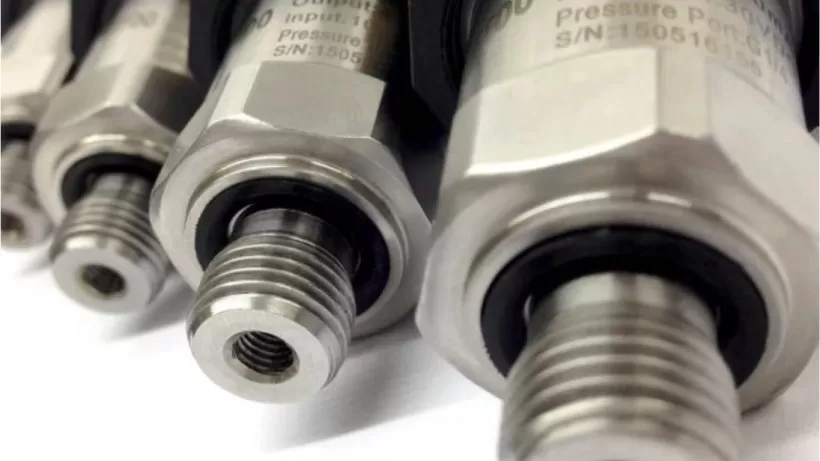
In modern industries, process control is critical to ensure safety, efficiency, and product quality. Among the many devices used to achieve these objectives, pressure transmitters play a central role. These instruments measure pressure and convert it into electrical signals that can be monitored and controlled by automation systems. This article explores how pressure transmitters work, their benefits in industrial applications, and why they are essential for optimizing operations.
A pressure transmitter is a device that measures pressure in gases or liquids and sends the data to control systems such as PLCs (Programmable Logic Controllers) or SCADA systems. Unlike pressure gauges, which only display the reading locally, transmitters provide continuous signals that can be integrated into complex industrial processes.
They typically measure:
Gauge Pressure (relative to atmospheric pressure)
Absolute Pressure (relative to vacuum)
Differential Pressure (difference between two points in a system)
Sensing Element – The transmitter detects changes in pressure using a diaphragm or piezoresistive sensor.
Conversion – The pressure is converted into an electrical signal (typically 4–20 mA or digital).
Output – The signal is transmitted to controllers or monitoring systems.
This continuous monitoring allows industries to adjust processes in real time.
Pressure transmitters prevent accidents by providing early warnings of abnormal pressure levels. In industries such as oil, gas, and chemicals, this helps avoid dangerous leaks or explosions.
By ensuring that pressure levels are always optimal, transmitters help maximize system efficiency. For example, in water treatment plants, they maintain consistent flow and prevent pump overload.
Accurate pressure monitoring reduces wasted energy. Compressors, pumps, and HVAC systems work only as hard as necessary, cutting unnecessary consumption.
Since transmitters can send signals to digital control systems, operators can monitor processes remotely, improving responsiveness and reducing downtime.
Maintaining stable pressure reduces wear and tear on pumps, pipelines, and other equipment, lowering maintenance costs and extending asset lifespan.
Oil & Gas Industry
Monitoring pipeline pressures
Ensuring safe drilling operations
Preventing leaks and blowouts
Water & Wastewater Treatment
Measuring water pressure in distribution systems
Controlling pumps for consistent water supply
Monitoring filter performance
HVAC Systems
Optimizing airflow and pressure in ducts
Reducing energy usage in large buildings
Food & Beverage Industry
Ensuring hygienic and safe pressure control in processing systems
Monitoring pressure in steam sterilization processes
Pharmaceuticals
Critical for sterile environments and process reliability
Pressure control in bioreactors and cleanrooms
When selecting a pressure transmitter, industries should consider:
Measurement range – Must match the system's expected pressure levels.
Accuracy requirements – Higher precision is essential for sensitive applications.
Environmental conditions – Transmitters must withstand temperature, vibration, or corrosive environments.
Output signal type – Analog (4–20 mA) or digital protocols (HART, Modbus).
Certification – Compliance with safety standards (e.g., ATEX for hazardous areas).
Lefoo offers advanced pressure transmitters designed for reliability and accuracy. With years of experience in sensor technology, Lefoo products are trusted across industries worldwide. Key advantages include:
High precision measurement
Durable construction for harsh environments
Easy integration with industrial control systems
Wide range of models for different applications
By combining innovation with quality, Lefoo helps industries achieve safer, more efficient, and more sustainable operations.
Pressure transmitters are indispensable in modern industrial applications, from oil and gas to HVAC and pharmaceuticals. They improve safety, efficiency, and energy savings while enabling automation and real-time monitoring. Choosing a reliable partner like Lefoo ensures that industries benefit from high-quality instrumentation designed to meet their specific needs.
With the right pressure transmitters, companies can take process control to the next level—making operations safer, smarter, and more sustainable.



 Log in
  English
  日本語
日本語  한국어
한국어  français
  Deutsch
  Español
  italiano
  русский
  português
  العربية