
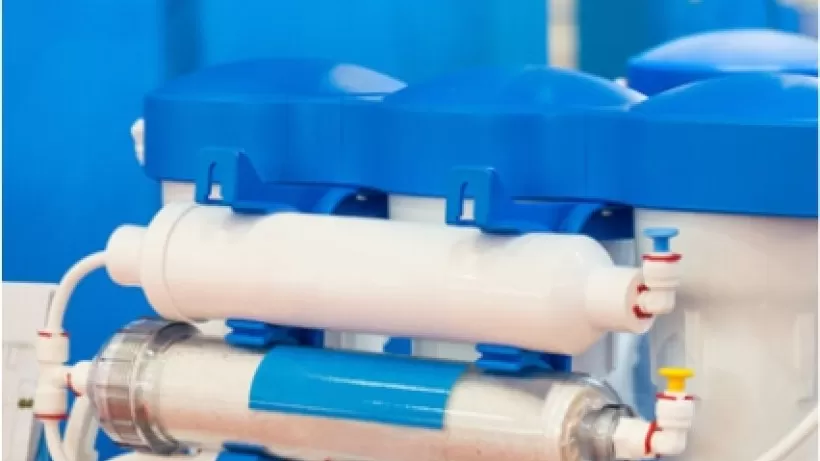
In industrial and commercial filtration systems, maintaining proper pressure balance is crucial for efficiency, safety, and product quality. Whether filtering air, water, or other fluids, the buildup of contaminants can restrict flow, reduce performance, and increase energy consumption. To prevent these issues, differential pressure sensors play a critical role.
By continuously monitoring the pressure difference across filters, these sensors provide valuable data that indicates when a filter is clean, partially clogged, or requires replacement. Reliable differential pressure monitoring not only ensures consistent system operation but also reduces maintenance costs and enhances overall equipment performance.
Lefoo pressure sensors are engineered to deliver accurate, stable, and long-term performance, making them ideal for use in air and liquid filtration systems across various industries.
Differential pressure is the difference between two measured pressure points—typically the inlet and outlet of a filter. When a filter is clean, the pressure difference is minimal. As contaminants accumulate, resistance increases, causing a higher pressure drop across the filter.
By using a differential pressure sensor, operators can monitor this change in real time. Once the differential pressure exceeds a set threshold, it signals that the filter is becoming clogged and maintenance is required. This prevents overloading the system, avoids unnecessary energy use, and ensures consistent flow and filtration quality.
A differential pressure sensor measures the pressure at two points and calculates the difference between them. The sensor contains two ports — one connected upstream (before the filter) and the other downstream (after the filter).
Inside, a sensing diaphragm detects the pressure differential and converts it into an electrical signal. This output can be displayed locally, transmitted to a control system, or used to trigger alarms or automated maintenance routines.
Lefoo's differential pressure sensors provide fast response, high accuracy, and excellent repeatability, even in harsh industrial conditions. They are suitable for both air and fluid systems, making them versatile tools for modern filtration monitoring.
Prevents System Downtime
Early detection of filter blockages allows maintenance teams to replace or clean filters before pressure drops affect performance.
Improves Energy Efficiency
A clogged filter forces pumps or fans to work harder, increasing energy consumption. Real-time monitoring ensures that filters are replaced at the optimal time, improving efficiency.
Ensures Consistent Product Quality
In industries such as pharmaceuticals or food processing, consistent filtration is essential for maintaining product purity.
Extends Equipment Life
Operating under the right pressure reduces wear on pumps, fans, and valves, minimizing maintenance costs.
Supports Predictive Maintenance
Data from pressure sensors can be analyzed to predict filter lifespan and schedule maintenance proactively.
By incorporating Lefoo differential pressure sensors, industries can achieve smarter, more sustainable filtration management.
HVAC and Cleanroom Systems
Differential pressure sensors monitor air filters in ventilation ducts, air handlers, and cleanroom environments. They help maintain proper air circulation and ensure compliance with air quality standards.
Water Treatment and Filtration
Monitoring pressure across cartridge or membrane filters ensures stable flow and prevents pump overload. Lefoo sensors are ideal for reverse osmosis and water purification systems.
Industrial Process Filtration
In chemical, food, and beverage industries, accurate pressure monitoring guarantees consistent filtration of liquids and gases.
Oil and Gas Filtration
Sensors track pressure in hydraulic and lubrication systems, helping detect clogging and prevent costly equipment failures.
Automotive and Aerospace Applications
Differential pressure sensors maintain filter efficiency in fuel and air intake systems, improving performance and reliability.
Lefoo has developed a range of differential pressure sensors designed for high-performance industrial environments. These devices feature advanced sensing elements and durable housings that resist corrosion, vibration, and temperature variation.
Key advantages include:
High accuracy and repeatability for precise monitoring.
Wide pressure range suitable for air and liquid systems.
Temperature compensation for consistent output under variable conditions.
Compact design for easy installation in confined spaces.
Analog and digital outputs compatible with PLCs and building automation systems.
Long-term stability with minimal signal drift.
Lefoo sensors are ideal for integration with smart control systems, allowing real-time monitoring and remote alerts through industrial IoT networks.
Automation plays an increasing role in modern industrial operations. When differential pressure sensors are connected to control systems, they enable real-time analysis and automated responses.
For example:
When a filter reaches a defined pressure drop, the system can automatically trigger a maintenance alert.
In advanced setups, it can open bypass valves or start a backwashing cycle automatically.
In HVAC systems, sensor data helps optimize fan speed to balance airflow while conserving energy.
By combining Lefoo differential pressure sensors with digital controllers, facilities can transform filtration systems into intelligent, self-regulating networks that ensure efficiency and reliability.
Install Sensors at Key Points: Always measure before and after filters for accurate readings.
Perform Regular Calibration: Periodic calibration ensures long-term accuracy and compliance with quality standards.
Protect Against Moisture and Contamination: Use protective housings or filters to safeguard sensors.
Monitor Data Trends: Use analytics to predict maintenance needs and optimize filter replacement cycles.
Choose the Right Model: Select sensors with appropriate pressure range, output signal, and material compatibility for your application.
Lefoo's sensor technology simplifies all these steps, ensuring dependable performance in both manual and automated systems.
Differential pressure sensors are indispensable for modern filtration systems. By monitoring pressure differences accurately, they ensure efficient operation, prevent unnecessary energy waste, and protect valuable equipment.
With their advanced design, precision engineering, and long-term durability, Lefoo pressure sensors offer a trusted solution for industrial air and liquid filtration. From HVAC systems to water treatment plants, Lefoo provides the reliability and intelligence that industries need to achieve clean, efficient, and sustainable operations.



 Log in
  English
  日本語
日本語  한국어
한국어  français
  Deutsch
  Español
  italiano
  русский
  português
  العربية