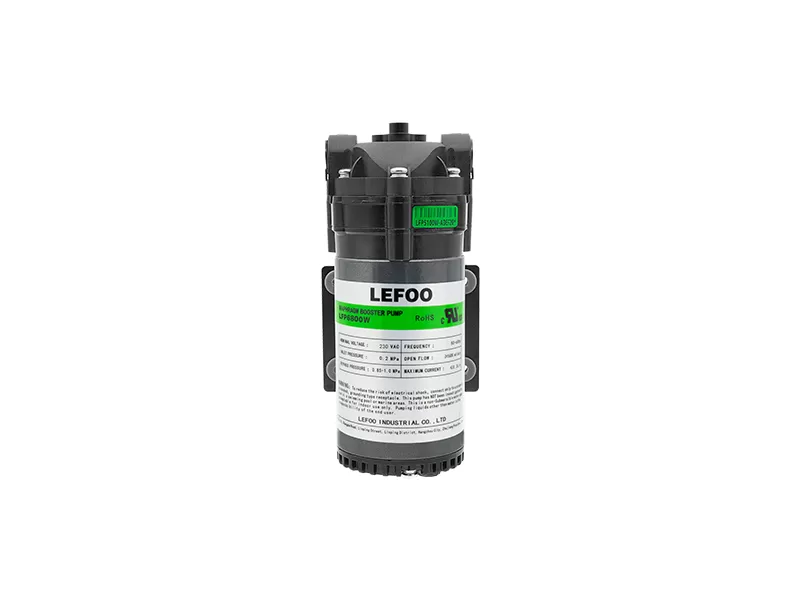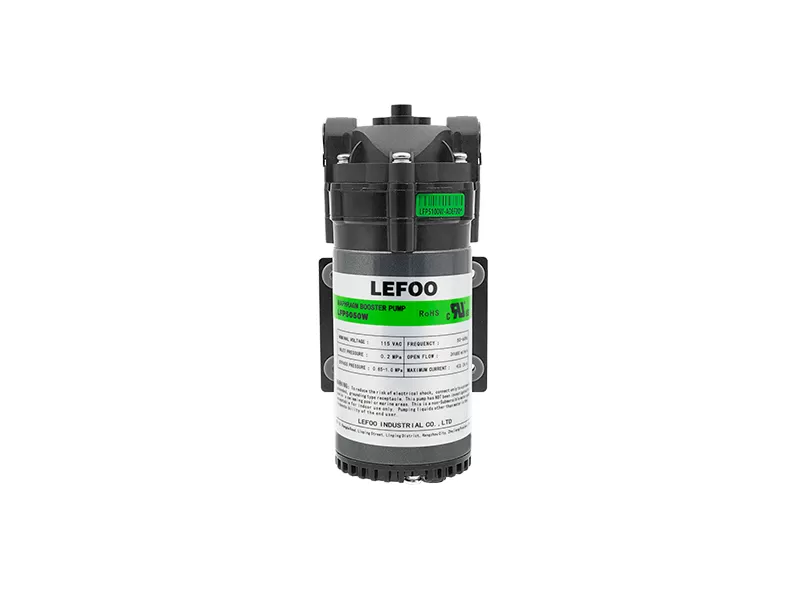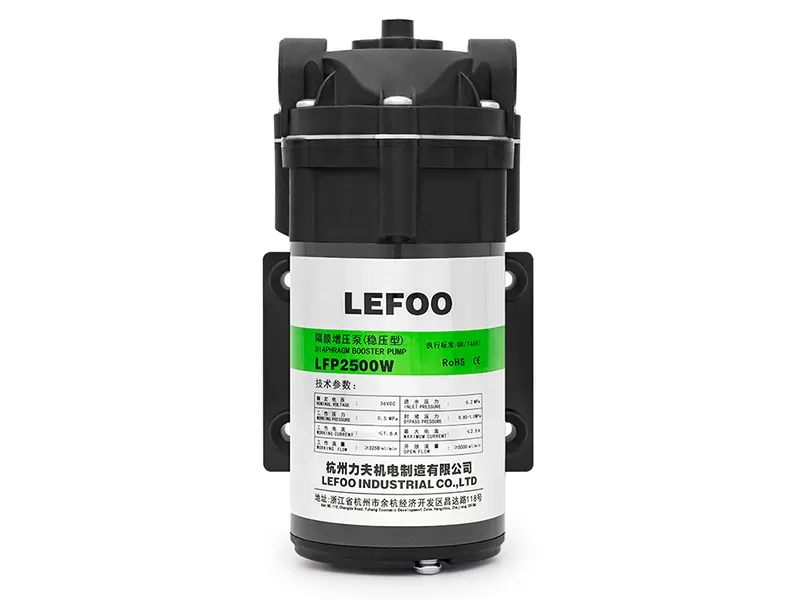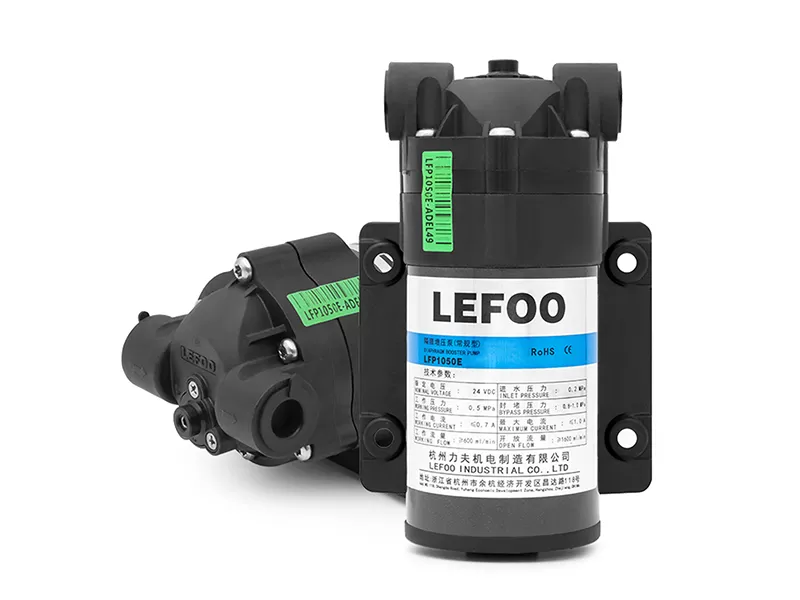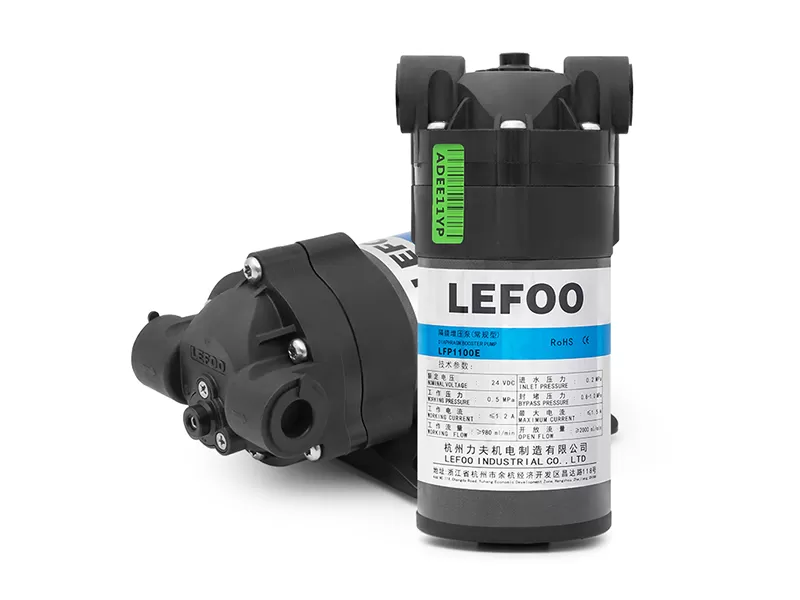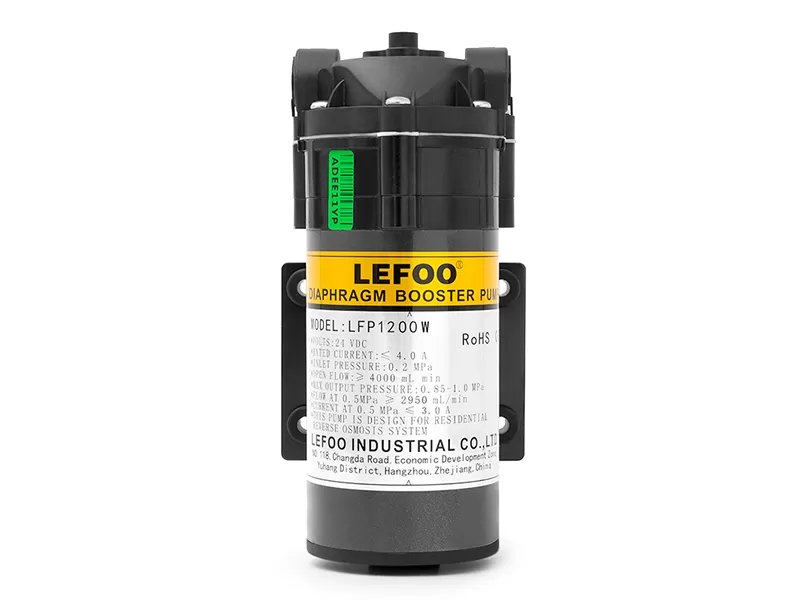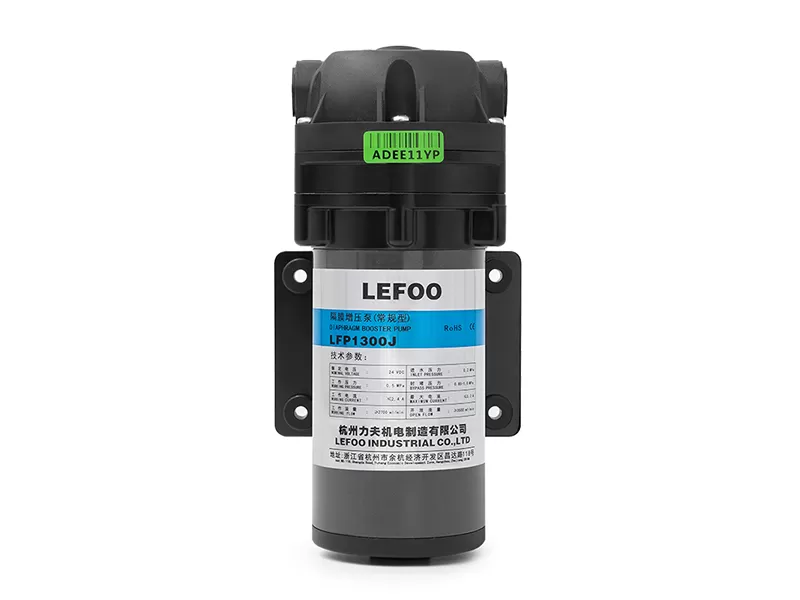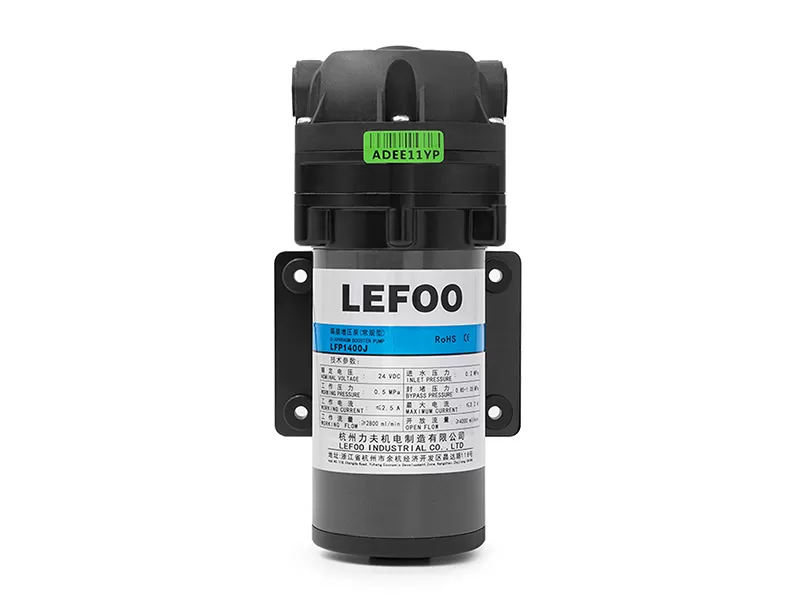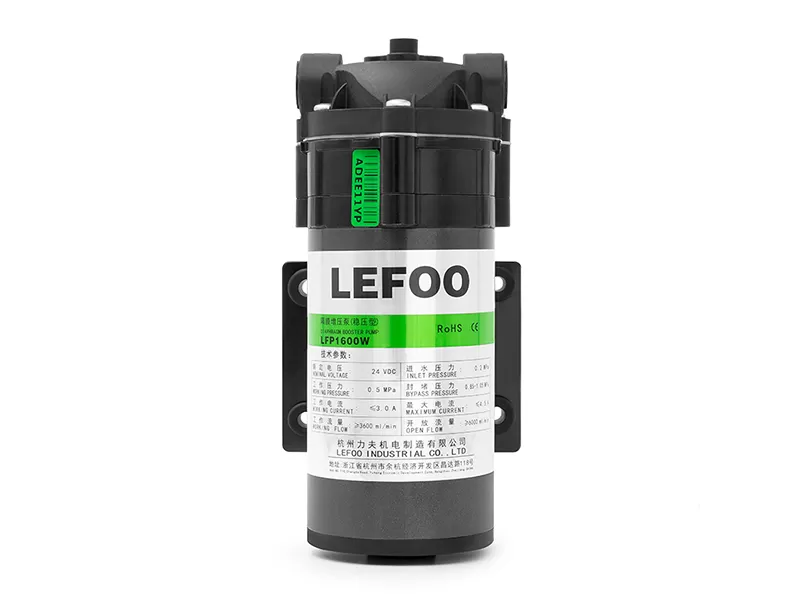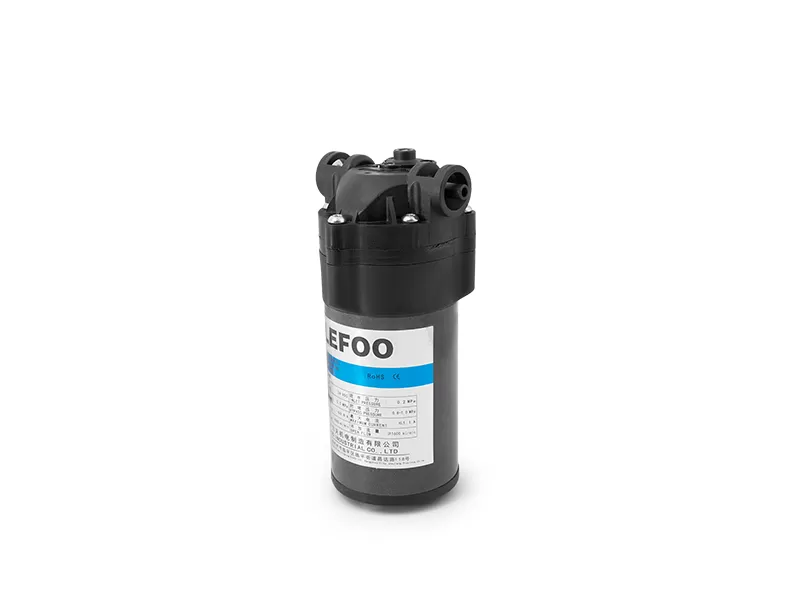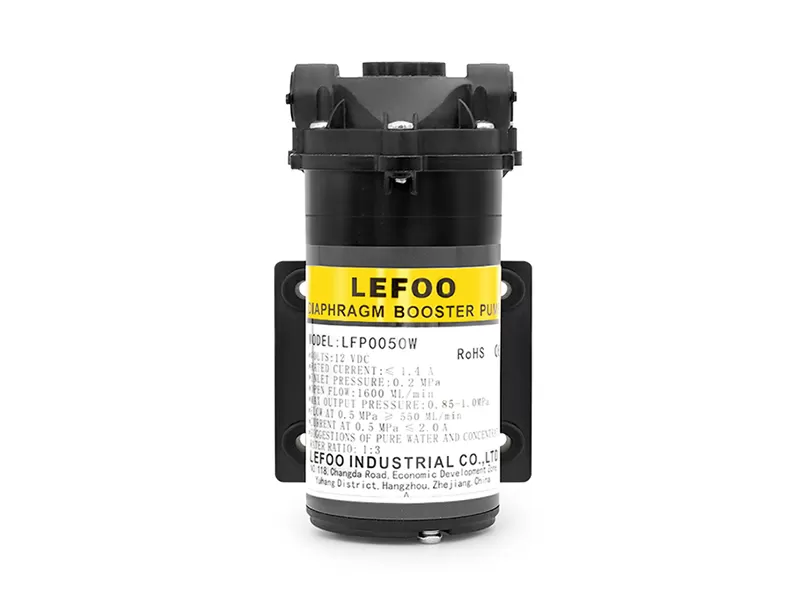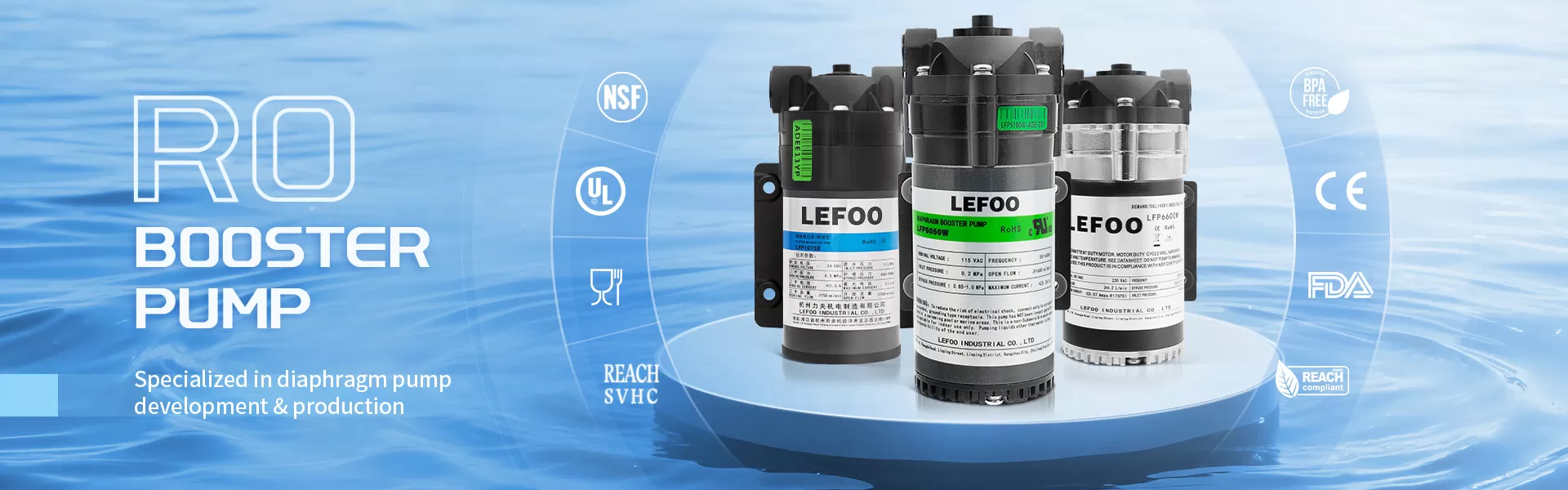

Engineered for durability and precision, our diaphragm booster pumps ensure consistent water pressure for reverse osmosis (RO) systems in industrial, agricultural, and residential applications. Featuring robust construction, energy-efficient operation, and low-maintenance design, they enhance RO performance by stabilizing flow rates and protecting membrane longevity. Ideal for demanding water treatment processes, these pumps deliver reliable, pulsation-free performance to maximize filtration efficiency and clean water output.

ROHS, CE, CQC, REACH certifications

Pressure-bearing components made of high-strength plastic and metal materials

Water-contact components comply with NSF and FDA food-grade requirements

Low noise, low vibration, high-power DC motor configuration

High flow rate, compact size, stable pressure, and long lifespan

Full inspection control of electrical, sealing, and pressure-boosting performance throughout the production process

To choose the correct diaphragm booster pump for your RO system, consider:
Flow Rate (GPM/LPM) – Match the pump’s capacity to your RO system’s required output.
Pressure (PSI/Bar) – Ensure the pump can achieve the optimal pressure (typically 60–100 PSI) for RO membranes.
Power Supply – Check voltage (12V/24V/110V/220V) compatibility.
Pipe Size – Confirm inlet/outlet connections match your plumbing.
Application – Residential, commercial, or industrial use may require different pump capacities.
An RO booster pump is necessary if:
Low Water Pressure – RO systems require ≥40 PSI; below this, filtration efficiency drops.
Slow Water Production – If purified water trickles out, pressure is insufficient.
Frequent System Shutdowns – Many RO units auto-stop if pressure is too low.
High TDS in Output – Weak pressure reduces membrane effectiveness, increasing impurities.
Solution: Install a booster pump to stabilize pressure and optimize performance.
Method 1: Use a Pressure Gauge
1. Attach a water pressure gauge to an RO system’s inlet or a faucet.
2. Turn on the water supply and read the PSI/Bar value.
a. <40 PSI → Booster pump needed.
b. 40–80 PSI → Ideal for most RO systems.
c. >100 PSI → A pressure reducer may be required.
Method 2: Check Flow Rate
Time how long it takes to fill a 1-gallon (3.8L) container from the RO faucet.
>60 seconds suggests low pressure.
Note: Test at peak usage times for accurate results.



 Log in
  English
  日本語
日本語  한국어
한국어  français
  Deutsch
  Español
  italiano
  русский
  português
  العربية