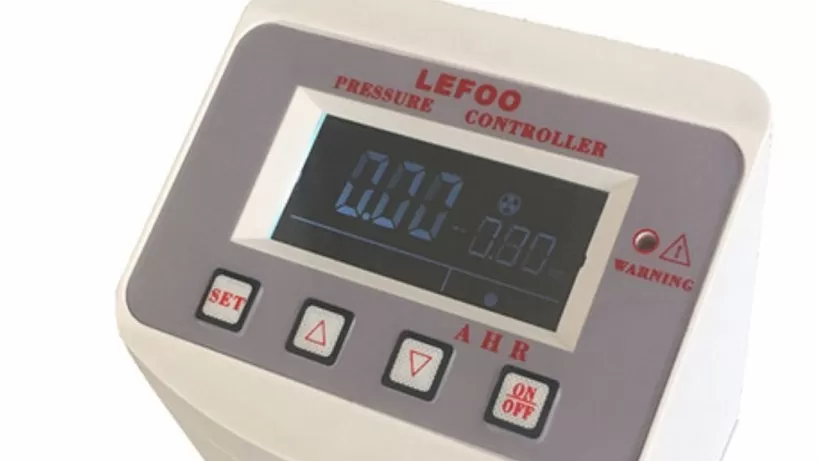
In industrial, commercial, and even residential systems, pressure sensors play a critical role in monitoring and controlling processes. These devices ensure safety, efficiency, and accuracy across various applications, including HVAC systems, medical equipment, water treatment, and manufacturing. However, like any precision instrument, pressure sensors can drift over time. That's why periodic pressure sensor calibration is essential to maintain reliable performance and avoid costly consequences.
In this article, we explore why calibration matters, how it works, and how companies like Lefoo support industries with high-quality sensors and calibration-ready solutions.
Calibration is the process of comparing a pressure sensor's output to a known reference standard and adjusting it if necessary. Over time, due to environmental exposure, mechanical stress, or aging, a sensor's accuracy can degrade. Calibration ensures that the sensor continues to produce correct readings within its specified tolerance.
Accurate pressure readings are crucial in processes that rely on tight tolerances. Inaccuracies can lead to product defects, system inefficiencies, or even dangerous situations, especially in applications involving gases or liquids under pressure.
Incorrect readings from an uncalibrated pressure sensor might lead to operating equipment under unsafe conditions. This can cause premature wear or catastrophic failure, resulting in downtime and high repair costs.
Many industries, such as pharmaceuticals, food processing, and oil & gas, are governed by strict regulations (e.g., ISO, FDA, ASME). Calibration ensures compliance with these standards and avoids penalties or production halts.
Sensors that provide accurate data help systems operate within optimal parameters. This reduces energy consumption, material waste, and operational costs, contributing to better overall performance.
The ideal calibration interval depends on the specific application, environmental conditions, and sensor model. However, general guidelines include:
High-criticality applications: every 3 to 6 months
Standard industrial use: every 6 to 12 months
Low-impact environments: annually or as recommended by the manufacturer
Regular calibration schedules should be part of a preventative maintenance program. Many companies log sensor data to detect performance drift and determine the optimal calibration frequency.
One of the most accurate methods, deadweight testers apply a known pressure using calibrated weights. The sensor output is compared against this reference.
These devices use precision digital gauges to generate and measure pressure. They are commonly used in field calibrations for their convenience and accuracy.
Used for multiple-sensor calibration, these benches simulate operating conditions in controlled lab settings.
Each method requires trained technicians and proper documentation to ensure traceability and compliance.
Unexpected pressure readings or alarms
Inconsistent system performance
Sensor readings differ from mechanical gauges or reference devices
After installation, maintenance, or exposure to extreme conditions
Monitoring sensor output for anomalies helps detect drift before it causes real issues.
At Lefoo, we understand that reliability and accuracy are critical. That's why our pressure sensors and transmitters are built with high-quality materials, rigorous quality control, and long-term stability in mind.
Factory calibration with test certificates
Long-term drift resistance
Compatibility with industry-standard calibration tools
Models designed for easy field recalibration
Whether your application is HVAC, water systems, compressors, or industrial automation, Lefoo products are engineered to deliver dependable performance.
Working with a trusted supplier like Lefoo means more than just buying hardware. You gain access to:
Expert support for calibration and installation
Documentation and certificates for quality audits
Custom sensor solutions tailored to your environment
Durable and accurate products that reduce total cost of ownership
Our global network ensures prompt service, technical guidance, and responsive logistics.
Pressure sensor calibration is not just a maintenance task—it's a safeguard for quality, safety, and efficiency. Regular calibration ensures accurate readings, prevents system failures, and helps companies meet industry standards.
As industries evolve and demand higher precision, the role of calibration becomes even more critical. With Lefoo's reliable pressure sensors and expert support, maintaining sensor performance has never been easier.
Stay ahead of the curve. Calibrate regularly. Choose quality. Choose Lefoo.



 Log in
  English
  日本語
日本語  한국어
한국어  français
  Deutsch
  Español
  italiano
  русский
  português
  العربية